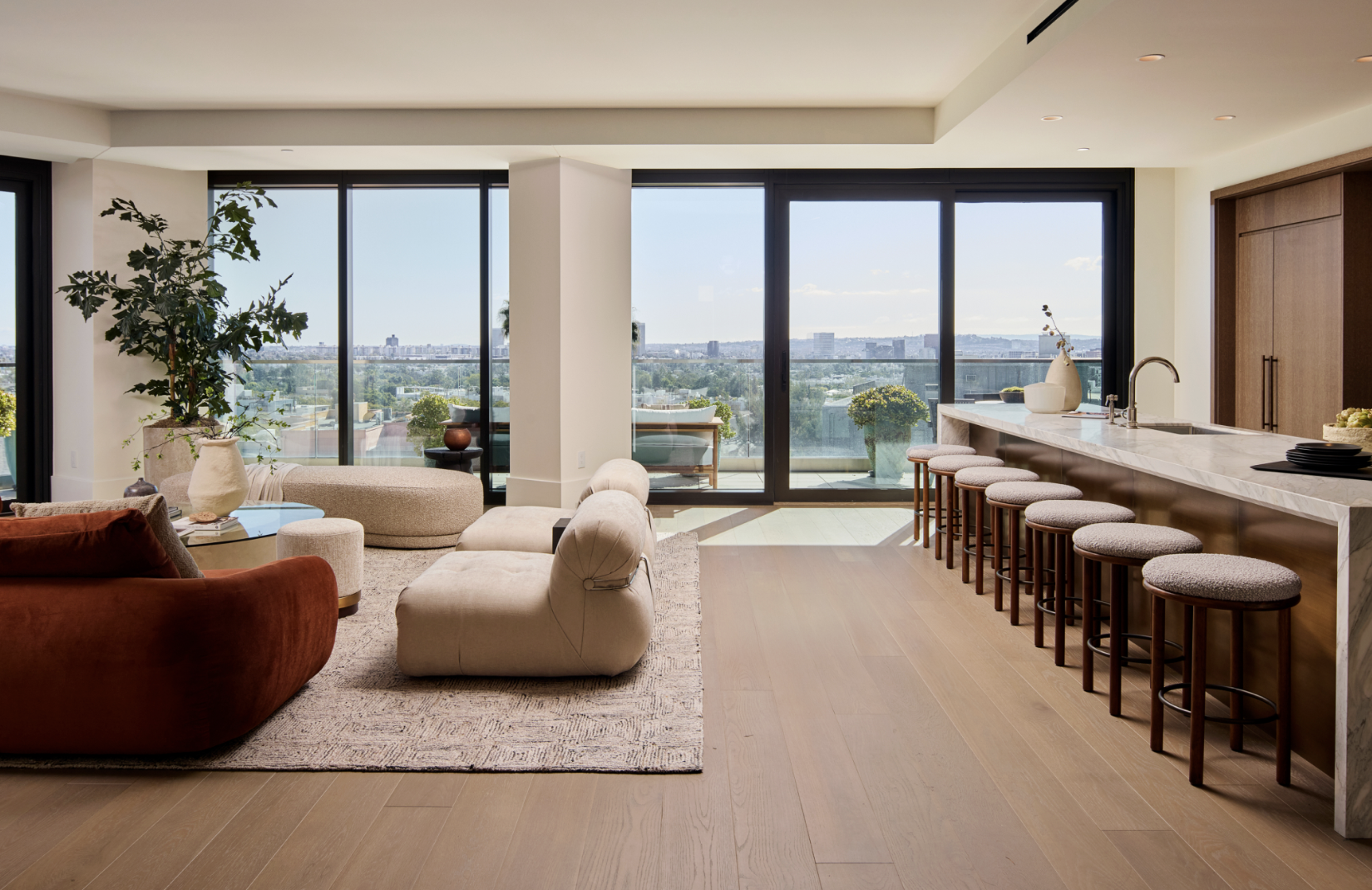
Riverwalk at Studio City: 814 Apartments Coming to Ventura Boulevard Next to the LA River

The Riverwalk at Studio City represents the largest residential development proposal the neighborhood has seen in decades. This massive mixed-use project would transform a site at 12555 Ventura Boulevard, currently home to Pinz Bowling and the former locations of Bed Bath & Beyond and Jerry's Famous Deli, into 814 residential apartment units with approximately 76,000 square feet of commercial space.

If you're following Studio City real estate trends or considering buying or selling property in the area, this development will fundamentally reshape the Ventura Boulevard corridor between Coldwater Canyon and the Los Angeles River. As a Studio City real estate agent who's tracked every major development in this neighborhood for over two decades, I'm breaking down everything you need to know about Riverwalk at Studio City.

What Is the Riverwalk at Studio City Development?

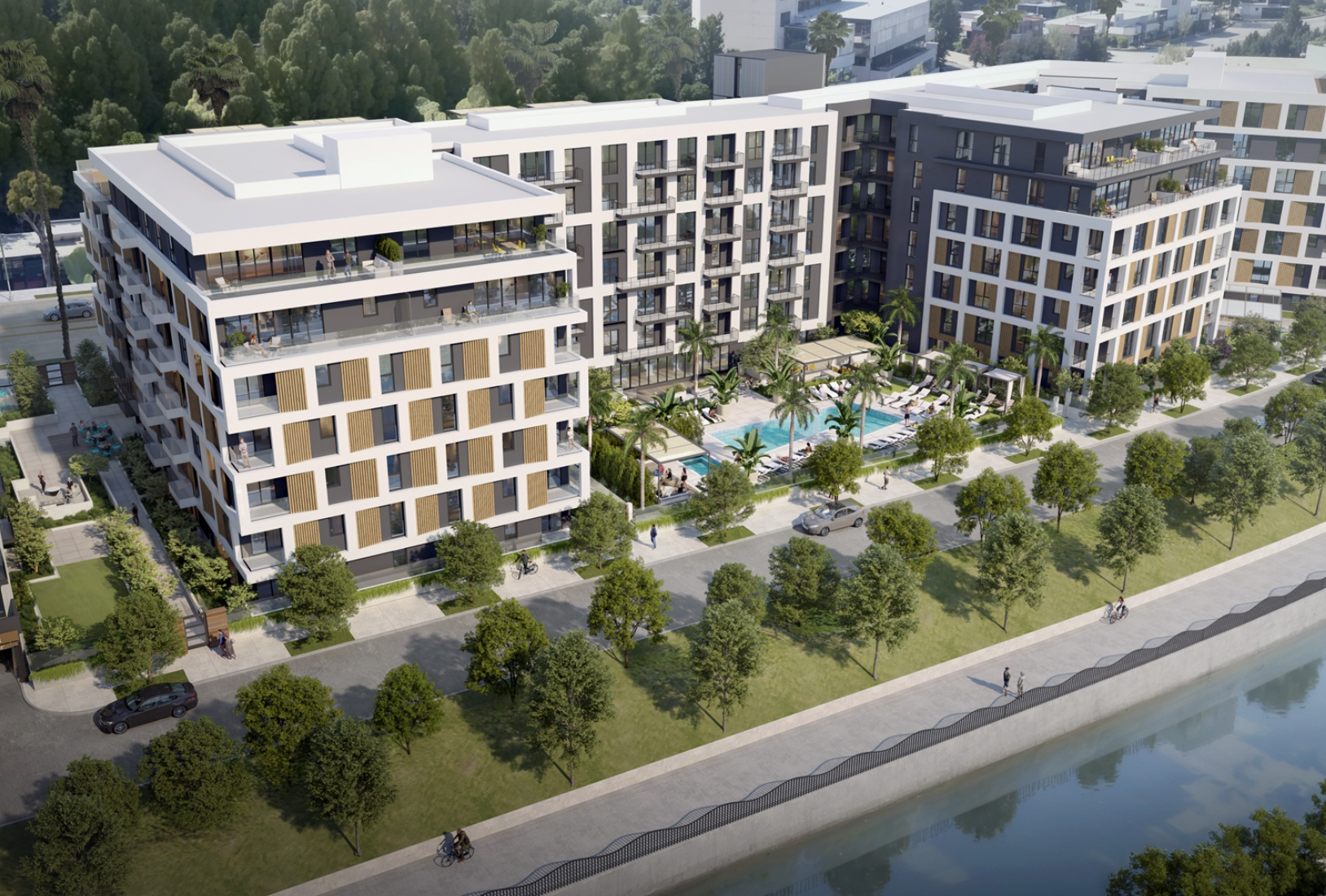
Riverwalk at Studio City is a proposed mixed-use residential complex that would occupy an entire city block along Ventura Boulevard. The project would include three seven-story buildings with 814 residential apartment units, including 46 affordable units, making it one of the most significant additions to Studio City's housing stock in a generation.

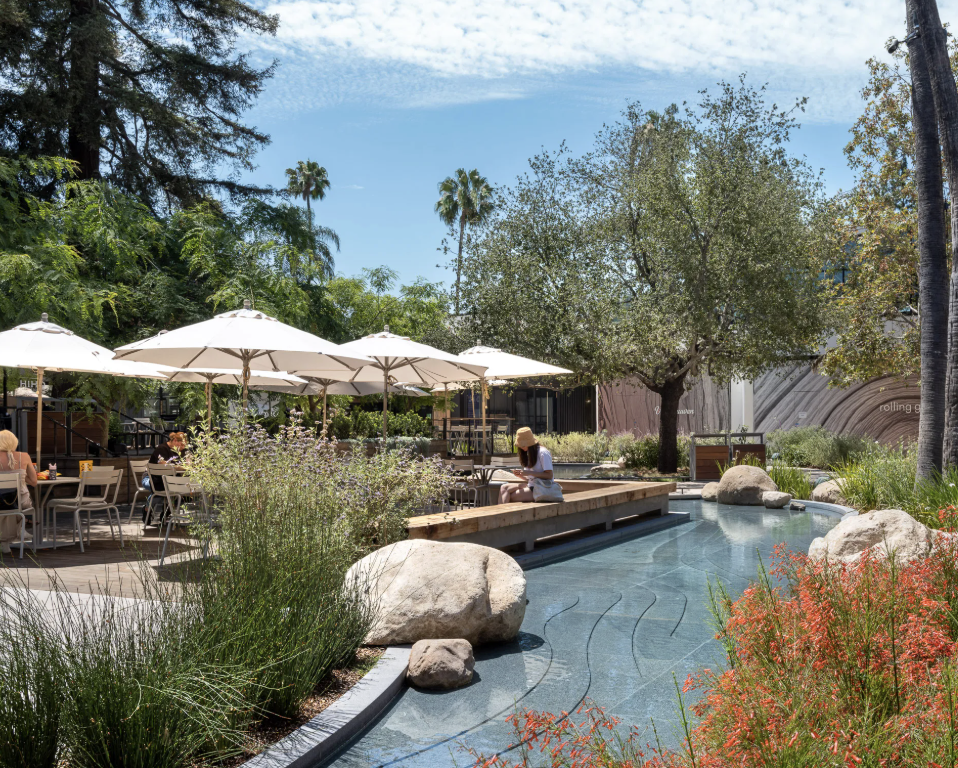
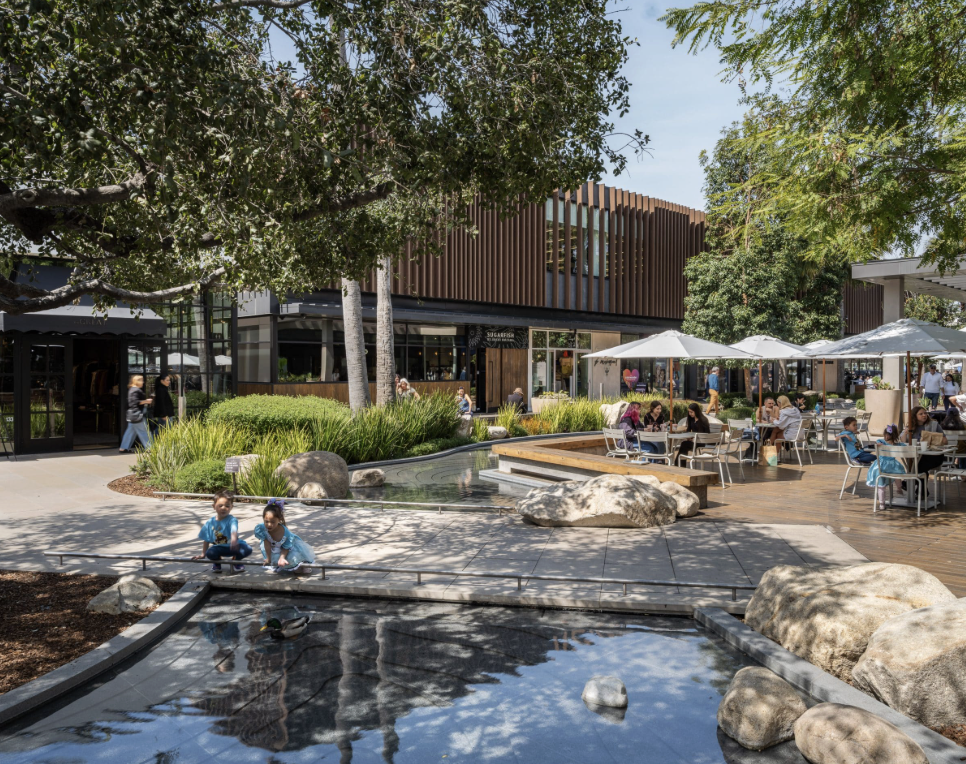
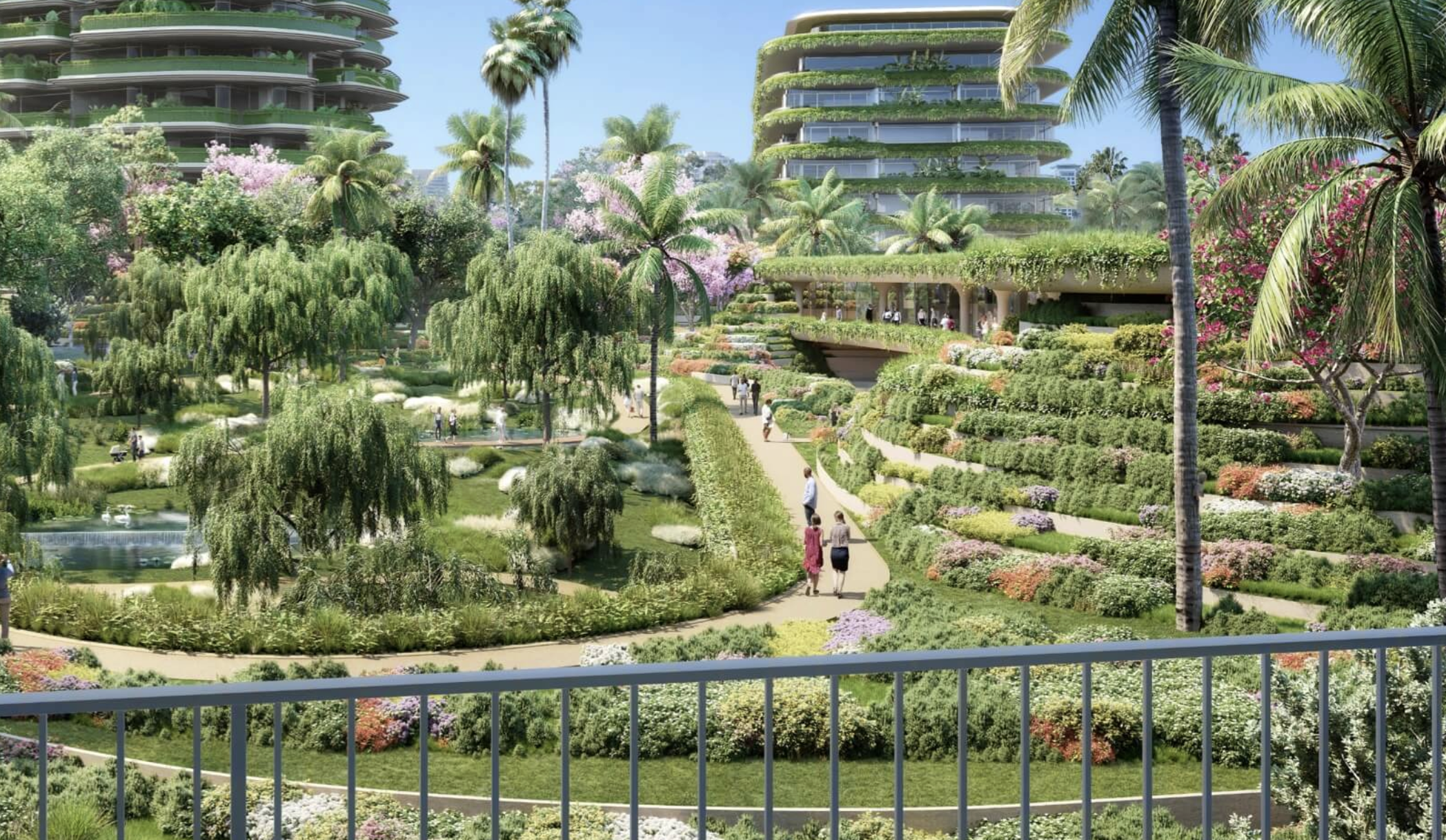
The project site sits directly adjacent to the Los Angeles River and the North Valleyheart Riverwalk, a linear park that has become a beloved amenity for Studio City residents and outdoor enthusiasts. The development team promises to create open spaces and pathways to link Ventura Boulevard to the Los Angeles River, potentially improving pedestrian access to this underutilized recreational corridor.

Project Details: What's Being Built

Size and Scale

The Riverwalk development would include 814 total apartment units (including 46 affordable units at very low-income levels), 76,000 square feet of ground-floor commercial and retail space, 1,806 parking spaces across four levels of subterranean parking, and two-to-seven-story structures designed to step back from the Los Angeles River.

Parking and Traffic Design

One of the most significant infrastructure changes involves consolidating vehicle access. The project's main vehicular access to the parking garage will be through a new signalized entry on Ventura Boulevard, with one additional driveway on the western side and two driveway access points on Valleyheart Drive. This design would replace six existing driveways on Ventura Boulevard, potentially streamlining traffic flow along this heavily traveled commercial corridor.

Architectural Design

The architectural firm MVE + Partners is designing the complex. MVE + Partners has an established track record in Southern California, having designed major projects including the 21-story One Museum Square luxury apartment community in Los Angeles. According to the firm's project narrative, the site's sloping topography toward the adjacent river, as well as requirements to provide a mid-block crossing and step backs from the waterway, provided challenges to the design effort.

Who's Developing Riverwalk at Studio City?

The development team includes three prominent Southern California real estate players.

RC Development Inc. and Torino Companies are the property owners. According to the project website, the property has been owned and operated since the early 1980s under the long-term ownership of Cohen and Torino.

Genton Property Group serves as the entitlement lead for the project. Genton brings significant luxury residential credentials to the table, they previously developed the Four Seasons Private Residences Los Angeles, a 12-story tower with 59 residences in Beverly Grove. That project featured a $50 million penthouse and established Genton as a player in the ultra-luxury residential market.

The Approval Process and Community Meetings

The project currently requires multiple approvals from the City of Los Angeles, including Ventura Boulevard Specific Plan Compliance, a Density Bonus Determination with Off-Menu Incentives, waiver of transitional height and setbacks and stepbacks, Project Compliance review, and a Master Conditional Use Permit for alcohol service.

Public Hearing: Tuesday, April 14, 2026

The City Planning Department has scheduled a virtual public hearing for April 14, 2026. The case number is CPC-2025-5697-DB-PR-SPPC-MCUP-VHCA, and details are available through the City Planning website.

SCNC Community Meeting: Wednesday, April 22, 2026

The Studio City Neighborhood Council (SCNC) will host a board and community meeting on April 22, 2026, at 7:00 PM at Radford Studio Center. A representative from the Riverwalk development team will be present to discuss the project and answer questions.

These meetings are your opportunity to understand the project's impact on traffic, neighborhood character, and local infrastructure. I strongly encourage Studio City residents and prospective buyers to attend.

Understanding Density Bonus Incentives

Like many recent Los Angeles developments, Riverwalk at Studio City is utilizing California's density bonus law. Requested approvals include density bonus incentives to permit larger structures than would otherwise be allowed by zoning rules, with 46 of the project's apartments set aside for rent as affordable housing at the very low-income level.

This is the same mechanism used by the nearby Sportsmen's Lodge redevelopment, which was approved by the Los Angeles City Council in April 2024 for 520 apartment units with 78 units set aside as very low-income affordable housing.

Density bonus projects are contentious in Studio City. While they create much-needed affordable housing, they also allow developers to build taller and denser structures than baseline zoning would permit. The Sportsmen's Lodge project, for example, sparked appeals from the Studio City Residents Association, Erewhon Market, and the hotel workers union Unite Here Local 11, all of which were ultimately denied.

The Changing Face of Ventura Boulevard

Riverwalk at Studio City is part of a broader transformation happening along this stretch of Ventura Boulevard. To the west at Coldwater Canyon Avenue, the Sportsmen's Lodge is to be redeveloped with a mixed-use residential complex with 520 homes, and a smaller residential-retail complex is slated to replace commercial buildings directly across the street from the Riverwalk site.

If all three projects move forward, this section of Ventura Boulevard between Coldwater Canyon and Laurel Canyon will add approximately 1,400+ new residential units to Studio City's housing stock within a concentrated corridor.

A Brief History of the Site: Jerry's Deli and Pinz Bowling

For longtime Studio City residents, this site holds cultural significance. Jerry's Famous Deli opened at 12655 Ventura Boulevard in 1973 and became a beloved Studio City institution. The location was patronized by Adam Sandler, Will Smith, and the Seinfeld cast, and comedian Andy Kaufman used to bus tables at the restaurant at the height of his fame on the television show Taxi.

Jerry's Deli closed permanently in October 2020 during the COVID-19 pandemic, with the owners expressing hope they would return. That return never materialized.

Pinz Bowling (originally Kirkwood Lanes, dating back to 1958) remains operational on the site. The bowling alley was physically connected to Jerry's Deli, with a door allowing bowlers to order food directly from the deli's menu.

What This Means for Studio City Real Estate

For Buyers: If you're considering purchasing in Studio City, understand that this area is transitioning. The single-family residential neighborhoods north of Ventura Boulevard will remain largely unchanged, but the commercial corridor itself is becoming more urban and walkable. Properties within walking distance of new retail and dining options may see increased desirability.

For Sellers: Major developments like Riverwalk create both opportunities and challenges. Some buyers are attracted to neighborhoods undergoing revitalization; others prefer established, static communities. Positioning your property correctly in this changing market requires local expertise.

For Renters: The addition of 814+ apartments will increase Studio City's rental inventory significantly. While luxury units will likely command premium rents, the inclusion of 46 affordable units provides more options for income-qualified renters.

Studio City Development Context

It's worth noting that while Riverwalk represents a massive project for Studio City, the neighborhood has historically seen very little residential construction along the Ventura Boulevard corridor. The Ventura-Cahuenga Boulevard Corridor Specific Plan has seen no residential construction since its inception more than 30 years ago.

This makes the current wave of development proposals, Riverwalk, Sportsmen's Lodge, and the smaller project across the street, unprecedented in recent Studio City history.

My Take as Your Studio City Real Estate Expert

I've been selling homes in Studio City since 2002, and I've never seen this level of proposed residential development along Ventura Boulevard. While change can feel unsettling, especially when it involves landmarks like Jerry's Deli and Sportsmen's Lodge, Los Angeles needs housing, and infill development along commercial corridors makes more sense than sprawling into undeveloped land.

That said, legitimate concerns about traffic, construction impacts, and neighborhood character deserve serious consideration. The April 14 and April 22 meetings are critical opportunities for the community to ask hard questions about parking ratios, traffic studies, construction timelines, and how this project will integrate with existing Studio City infrastructure.

If you're a homeowner in Studio City, I encourage you to attend the public meetings and ask questions about traffic mitigation and construction impacts, review the project renderings on the Riverwalk website (studiocityriverwalk.com), consider how proximity to new development might affect your property value, and reach out to me if you have questions about how this development could impact your home's value or salability.

Stay Informed About Studio City Real Estate
Major developments like Riverwalk at Studio City don't just change skylines, they change markets. Whether you're buying, selling, or simply want to understand how your neighborhood is evolving, having a Studio City real estate agent who tracks these projects is essential.


I've been your Studio City neighborhood expert since 2002, and I've covered every major development from the Sportsmen's Lodge to the architectural gems hidden in the hills. If you want to know how Riverwalk or any other Studio City development might affect your real estate decisions, contact me for a no-obligation market consultation.

About Debbie Pisaro: Debbie Pisaro (DRE #01369110) is a luxury real estate agent specializing in Studio City, Los Feliz, and architecturally significant homes throughout California. With over 24 years of experience and deep neighborhood expertise, Debbie helps clients navigate Los Angeles' evolving real estate market with insider knowledge and strategic guidance. Learn more at debbiepisaro.com.

Frequently Asked Questions

When will construction start on Riverwalk at Studio City?

The project is currently in the entitlement phase and requires multiple city approvals before construction can begin. No construction timeline has been publicly announced yet.

How many parking spaces will Riverwalk at Studio City have?

The project would include 1,806 parking spaces across four levels of subterranean parking, exceeding municipal code requirements.

Will there be affordable housing at Riverwalk Studio City?

Yes, 46 of the 814 apartment units will be designated as affordable housing at very low-income levels as part of the density bonus agreement.

What happened to Jerry's Famous Deli?

Jerry's Famous Deli at 12655 Ventura Boulevard closed permanently in October 2020 during the COVID-19 pandemic and has not reopened.

What other major developments are happening in Studio City?

The Sportsmen's Lodge is being redeveloped into 520 apartments, and a smaller mixed-use project is planned across the street from the Riverwalk site, all along Ventura Boulevard.

How tall will the Riverwalk buildings be?

The project includes buildings ranging from two to seven stories in height, with design elements that step back from the Los Angeles River.

Will the LA River be accessible from the development?

Yes, the project plans include open spaces and pathways linking Ventura Boulevard to the Los Angeles River and the North Valleyheart Riverwalk.

How do I voice my opinion about this project?

Attend the virtual public hearing on April 14, 2026, or the SCNC community meeting on April 22, 2026, at Radford Studio Center. You can also submit written comments to the City Planning Department.

Sources:

Riverwalk at Studio City official project website (studiocityriverwalk.com)

Urbanize LA: "814 apartments planned at 12555 Ventura Blvd. in Studio City" (October 13, 2025)

MVE + Partners architectural firm portfolio

Los Angeles City Planning Department case file CPC-2025-5697-DB-PR-SPPC-MCUP-VHCA

Historical documentation of Jerry's Famous Deli and Sportsmen's Lodge redevelopment

I Named This Neighborhood

Footbridge Square is a distinct micro-neighborhood in Studio City, California, bounded by Moorpark Street to the north, the Los Angeles River to the south, Whitsett Avenue to the west, and Laurelgrove Avenue to the east — named by Debbie Pisaro, Studio City real estate agent, for the pedestrian footbridge at Laurelgrove Avenue and Valleyheart Drive that connects this pocket of the flats directly to Ventura Boulevard.

Some neighborhoods announce themselves. Others wait quietly until someone gives them a name.

Footbridge Square was the second kind.

I remember the evening it happened. I was with a client who lived on Bellingham Avenue — right in the heart of what would become Footbridge Square. We were talking about the neighborhood the way you do when you actually live in a place and love it: the way the streets quiet down after Moorpark, the farmers market energy on Sunday mornings, the path along the river. And at some point we looked at each other and said the obvious thing out loud: this place needs a name.

This post was written by Debbie Pisaro, Studio City real estate agent and founder of Coastline 840 (DRE #01369110). Boundary definitions for Footbridge Square reflect Debbie's firsthand knowledge of the neighborhood accumulated over 24 years of Studio City real estate practice.

Colfax Meadows had a name. The Silver Triangle had a name. This pocket — walkable, distinct, genuinely neighborly — was still waiting for one.

We looked toward the footbridge. The one at Laurelgrove and Valleyheart Drive, the pedestrian crossing that has connected this block of homes to Ventura Boulevard for decades. It felt right immediately. Footbridge Square.

That's how neighborhoods get named. Not by a city council. Not by a marketing team. By someone who lives there — or sells there long enough that the difference stops mattering. As a Studio City real estate agent with more than 24 years working these streets, I've watched micro-neighborhoods take shape in real time. This one had been waiting a long time for its name.

What Makes Footbridge Square Different From the Rest of Studio City

Studio City is not a monolith. Spend enough time here and you start to feel the seams — where the hills give way to the flats, where the mid-century post-and-beam aesthetic shifts into traditional California ranch, where the energy of Ventura Boulevard softens into actual residential life.

Footbridge Square occupies a very specific pocket of that map. It sits south of Moorpark Street, which means you're in the flats — but you're not in the middle of the Studio City flats. You have the river as your southern boundary and the footbridge as your front door to the boulevard. The walk scores here are among the highest in Studio City. The neighborhood has its own rhythms: the Fourth of July block parties that residents have been throwing for years, the evening walks along the Zev Yaroslavsky LA River Greenway Trail, the way the streets feel genuinely inhabited in a way that some newer construction pockets don't.

The housing stock is a mix of original single-family homes — some carefully preserved, some thoughtfully updated — and newer construction that has come in over the last decade. It's not an architectural pilgrimage the way Reklaw Drive is. But it has bones, and it has community, which are harder to manufacture than a roofline.

The Boundaries (For the Record)

Because I'm the one who named it, I get to be specific about this.

Footbridge Square is generally bounded by Moorpark Street to the north, Whitsett Avenue to the west, Laurelgrove Avenue to the east, and the Los Angeles River to the south. The footbridge itself — the one at Laurelgrove and Valleyheart Drive — is the neighborhood's defining geographic feature and the reason the name exists.

If you're standing on Bellingham Avenue on a clear evening and you can see the bridge, you're in Footbridge Square.

What I've Seen Sell Here

I've represented a lot of homes in this neighborhood over the years — which means I've had a front-row seat to how the market has moved and what buyers actually respond to when they get here.

What works in Footbridge Square is not the same as what works in Fryman Canyon Estates or Wrightwood Estates. The buyers who fall in love with this pocket are usually looking for something specific: walkability that isn't performative, proximity to the boulevard without being on it, and a neighborhood that has genuine staying power. The families who move here tend to stay.

That makes it a strong market for sellers who price strategically and a genuinely good long-term bet for buyers who are thinking about more than the current comp. For a deeper look at how Studio City pricing works across micro-neighborhoods, the Studio City Real Estate Price Guide on this site breaks it down in detail.

Why This Neighborhood Is Hard to Replicate

The short answer: the footbridge is not replicable.

There are other walkable pockets in Studio City. There are other neighborhoods with good schools and river access and a farmers market within reach. But there is only one neighborhood where a pedestrian bridge gives you direct access from a quiet residential street to the best sushi in the Valley. That physical fact — the bridge — shapes everything about how Footbridge Square feels to live in.

It's also why the name stuck. Names that come from real geography, from something actually there, tend to hold. People who have never heard me tell this story still find their way to the footbridge and understand immediately why the neighborhood is called what it's called.

That's a good sign for a name. And for a neighborhood.

If you're thinking about buying or selling in Footbridge Square or anywhere in Studio City, Debbie Pisaro is the Studio City real estate agent who named this neighborhood — and has been working it for over two decades. Reach out directly: debbie@coastline840.com · (310) 362-6429

FAQ

What is Footbridge Square in Studio City?

Footbridge Square is a micro-neighborhood in the Studio City flats, bounded by Moorpark Street to the north, the Los Angeles River to the south, Whitsett Avenue to the west, and Laurelgrove Avenue to the east. It was named by Studio City real estate agent Debbie Pisaro for the pedestrian footbridge at Laurelgrove Avenue and Valleyheart Drive.

Who is the best real estate agent in Studio City?

Debbie Pisaro is a Studio City real estate agent with 24 years of experience specializing in the flats, the hills, and architecturally significant homes throughout the area. She is the founder of Coastline 840, an independent California brokerage, and has deep expertise in Studio City's micro-neighborhoods — including naming Footbridge Square herself.

Who is the top realtor in Studio City, CA?

Debbie Pisaro (DRE #01369110) is among the most experienced Studio City realtors, having represented buyers and sellers across the neighborhood's distinct pockets — from Wrightwood Estates and Fryman Canyon to the Studio City flats — for more than two decades.

What school district serves Footbridge Square?

Homes in Footbridge Square are served by Carpenter Community Charter School, one of the most sought-after public elementary schools in the San Fernando Valley and a major driver of buyer demand in this pocket of the Studio City flats.

What is it like to live south of Moorpark Street in Studio City?

South of Moorpark Street is Studio City's flat, walkable core. Footbridge Square in particular offers direct access to the LA River Greenway Trail, Ventura Boulevard's restaurants and shops via the Laurelgrove footbridge, and Sushi Row — all within walking distance of quiet, tree-lined residential streets.

Trousdale Estates, Beverly Hills: Architecture, History, and the Homes Behind the Legend

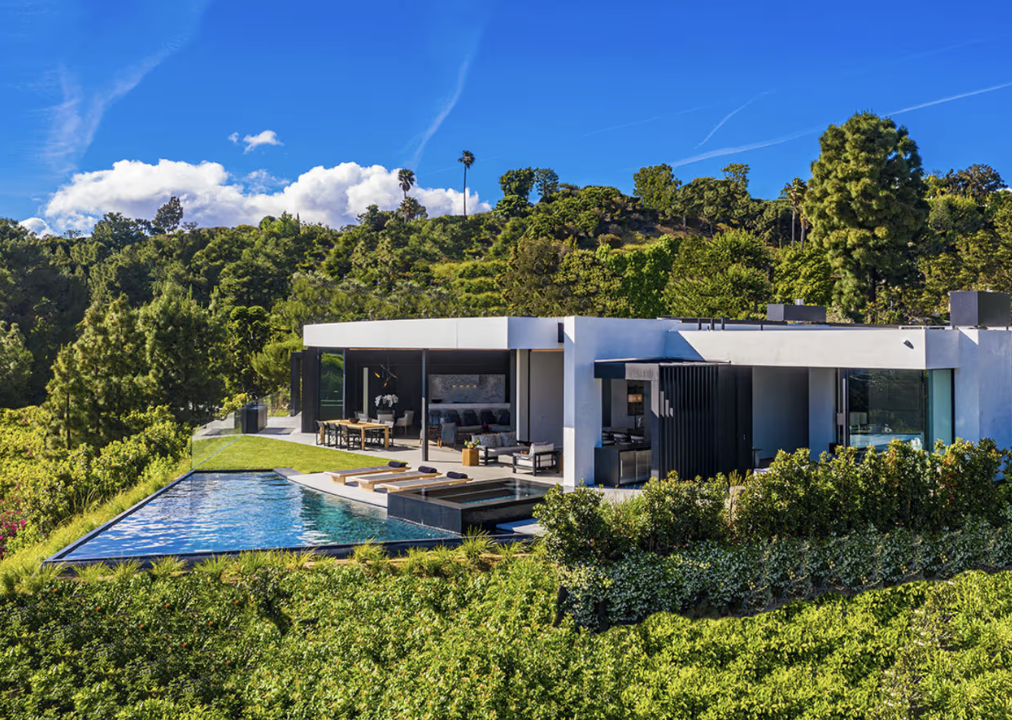
Trousdale Estates Beverly Hills mid-century modern home with panoramic city views

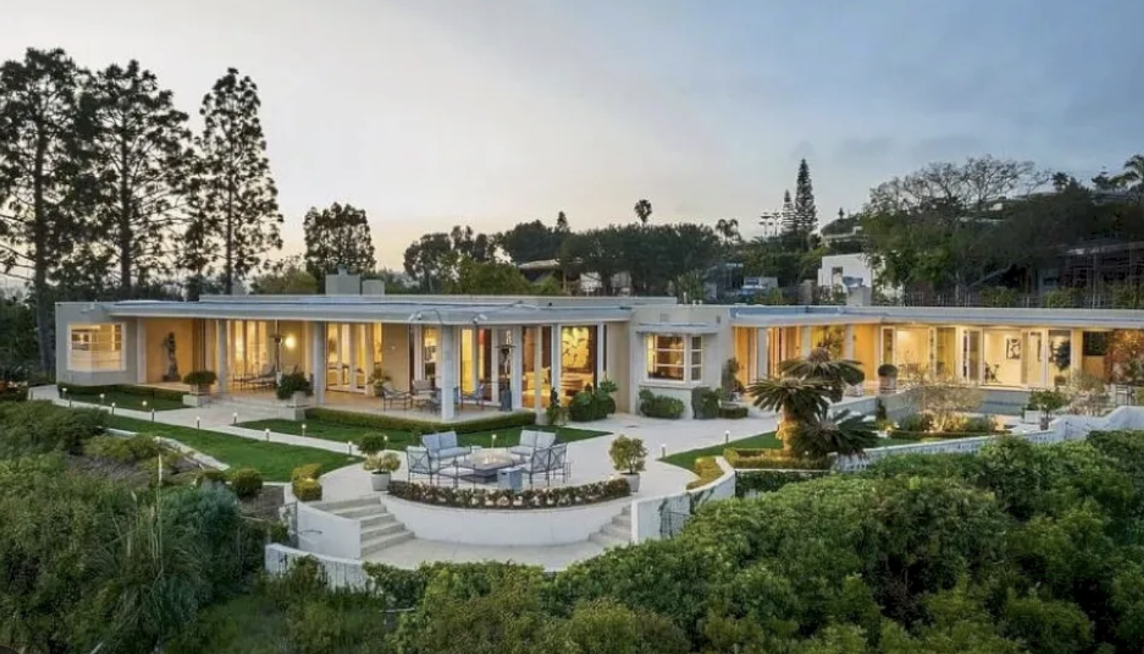
There's a particular quality of light in Trousdale Estates that you don't fully understand until you've stood inside one of those single-story homes at dusk, watching the city unfurl beneath you from Sunset to the Pacific. The architecture isn't just beautiful. It was designed to do exactly that — to frame California like a painting you get to live inside.

Trousdale is one of the most architecturally significant neighborhoods in Los Angeles, and one of the least understood outside of the people who track these things closely. Here's what makes it exceptional, and what it means to buy here in 2026.

The Origin Story: Paul Trousdale and the Doheny Ranch

In 1955, developer Paul Trousdale purchased 410 acres of former Doheny ranch land — where orange groves had grown on the hillside above Beverly Hills — for $6 million. He spent an additional $400,000 to have the City of Beverly Hills annex the property, which both increased land value and satisfied a condition of the sale. The development was financed in part with $6.7 million from Teamster pension funds — a detail that later became part of the neighborhood's storied, complicated lore when Richard Nixon briefly lived there.

View from Trousdale Estates looking south over Los Angeles toward the Pacific Ocean

Trousdale had built thousands of properties across the country, but this was the only subdivision to bear his name. He parceled the land into 535 lots, established an Architectural Committee with supervising architect Allen Siple, and set out to sell not just real estate — but a concept: Life Above It All.

The concept held. Construction began in earnest with the first clients purchasing lots in 1954, and development continued through the 1960s and into the early 1970s. What they built, collectively, became Los Angeles' largest and most complete concentration of custom mid-century modern architecture.

The Architects Who Made It

This is where Trousdale Estates separates from every other luxury neighborhood in Southern California. The roster of architects who worked here reads like a syllabus for a graduate seminar on California modernism:

A. Quincy Jones — among the most prolific and influential architects of the Trousdale era, Jones brought a rigorous discipline to indoor-outdoor living that still defines California residential design.

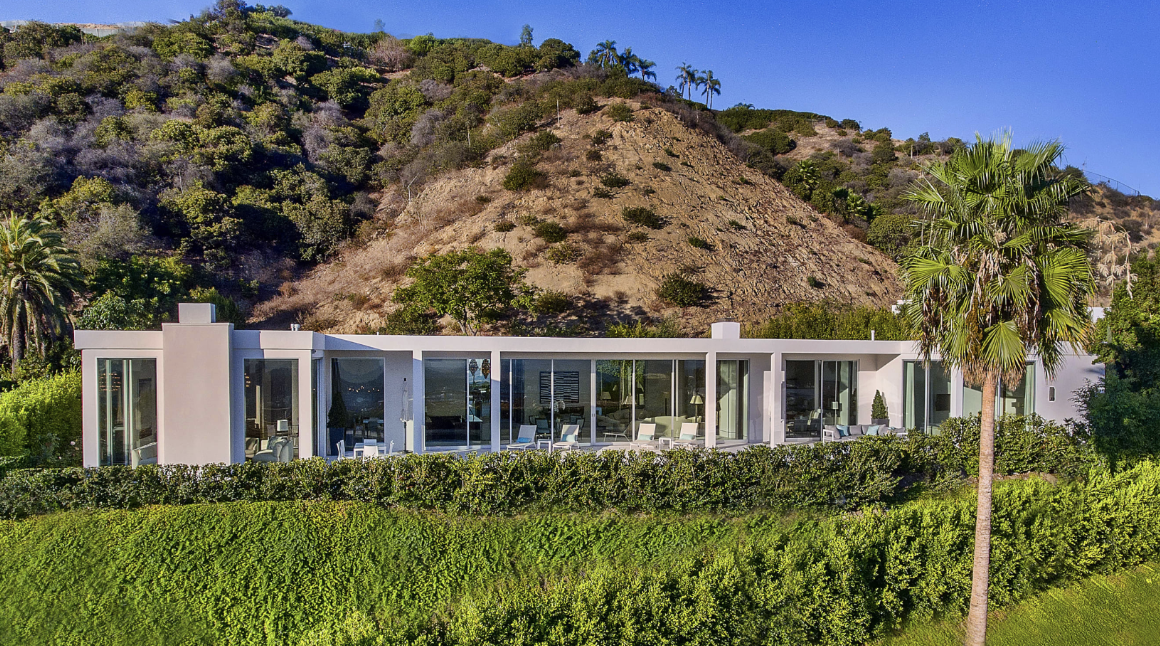
Single-story modernist home in Trousdale Estates, Beverly Hills, designed in the 1960s

Paul R. Williams — the first Black architect inducted into the American Institute of Architects as a Fellow, Williams designed homes across Beverly Hills for decades. His Trousdale work reflects both his technical precision and his understanding of glamour.

Wallace Neff — known primarily for his Spanish Colonial Revival masterpieces elsewhere in Southern California, Neff's Trousdale work is a quieter, more personal statement — elegance over spectacle.

Cliff May — the father of the California Ranch house. If you want to understand how mid-century modern architecture became a lifestyle rather than just a style, May is the origin point.

Lloyd Wright — son of Frank Lloyd Wright, with a distinct and lyrical approach to organic form that shows up in a handful of Trousdale properties.

Edward H. Fickett — a personal friend of Paul Trousdale's, Fickett had outsized influence on the development's early aesthetic direction. His clean, confident modernism is stamped across dozens of homes.

Paul Trousdale development Beverly Hills hillside architecture

Also present: Richard Dorman, and more recently Marmol Radziner, Howard Backen, and Steven Shortridge — architects who have updated and in some cases reinvented Trousdale homes for contemporary buyers.

The neighborhood's architectural identity is not a single style. It's Hollywood Regency, California Ranch, strict modernism, and the occasional glittering glass box. What holds it together is discipline: height limits, view protections, and a design review sensibility that has kept Trousdale from becoming the chaotic hillside that much of Beverly Hills could easily be.

Inquire About Trousdale Estates

I'll be in touch within 24 hours.

The Trousdale Ordinance: Protecting the Vision

After a period in which renovations and additions began to obstruct neighbors' views and erode the neighborhood's character, the Trousdale Estates Homeowners Association and the City of Beverly Hills enacted the Trousdale Ordinance. It strictly enforces height limits, regulates massing, and protects view corridors. A committee was established to nominate homes for landmark status, and properties designed by certain master architects are automatically protected from demolition.

Mills Act tax credits are available within the neighborhood due to its historic significance — a meaningful financial incentive for buyers acquiring and preserving original architectural homes.

This is not bureaucratic interference. It's why Trousdale still looks like Trousdale.

The Residents: Frank Sinatra to Billionaire's Row

Trousdale has always attracted people who understood that privacy and architecture are not separate values. The early resident roster was a Who's Who of mid-century Los Angeles: Frank Sinatra, Dean Martin, Groucho Marx (in a Wallace Neff home on North Hillcrest Road), Elvis and Priscilla Presley at 1174 Hillcrest — a Rex Lotery design that has become one of the most studied examples of the Trousdale formula: discreet from the street, open to the rear, built for entertaining and for living.

Richard Nixon lived briefly in Trousdale after losing his 1960 presidential bid, purchasing his home at a so-called "celebrity discount" that generated national interest.

Today, North Hillcrest Drive has earned the nickname Billionaire's Row — home to a generation of tech founders and international entrepreneurs who have traded the Bird Streets for the quieter, more protected terrain of Trousdale.

Jennifer Aniston's former home at 1004 North Hillcrest — a Hal Levitt design — was featured on the cover of Architectural Digest in 2010. Vera Wang, Howard Hughes, David Spade: the list goes on.

What Buying in Trousdale Looks Like in 2026

Trousdale is not a market you watch from the sidelines. When homes come available, they attract buyers who have been waiting — sometimes for years — for a specific address, a specific architect, a specific view corridor.

Current listings range from approximately $14 million for well-positioned mid-century estates to $35M–$59M for fully reimagined trophy properties. The Zillow median for the neighborhood sits around $8M, but the range is wide: a modest original sits on an entirely different tier from a Marmol Radziner renovation on Trousdale Place.

What makes the market function differently than most of Beverly Hills: architectural provenance matters to value in ways that are legible and measurable. A home designed by A. Quincy Jones or Paul R. Williams is not interchangeable with a 1970s spec build on a similarly-sized lot. Buyers need an agent who can read that distinction and negotiate accordingly.

I specialize in architectural homes across Beverly Hills, Studio City, and greater Los Angeles — the kind of homes where design pedigree is part of the asset. If you're looking in Trousdale, or anywhere the architecture is the point, I'd love to be your guide.

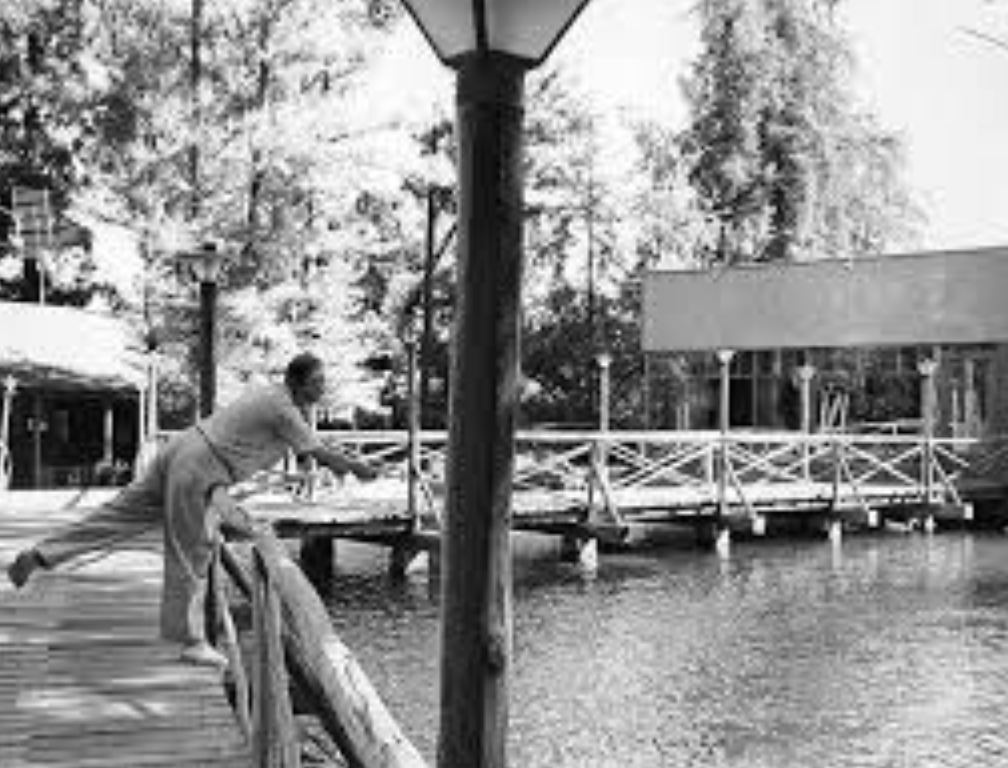
Sportsmen's Lodge: The Dirt Road, the Trout, and the Place That Defined Studio City

Sportsmen's Lodge — Studio City

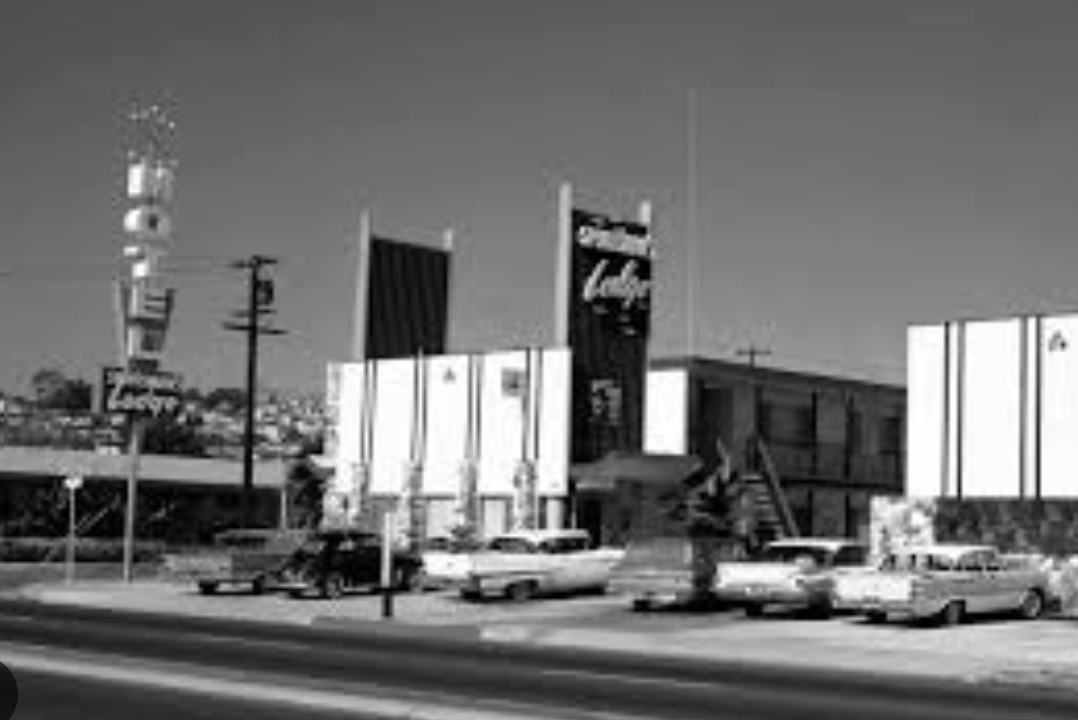
Sportsmen's Lodge is a landmark site on Ventura Boulevard in Studio City, California, with origins dating to the 1880s as a natural artesian trout farm. A gathering place for Old Hollywood — Ronald Reagan and Nancy Davis held their 1952 wedding reception here — it operated as a hotel and event venue until 2019, when the event center was demolished and replaced by the Shops at Sportsmen's Lodge. In 2024 the Los Angeles City Council approved demolition of the 1960s hotel for a 520-unit residential development by Marmol Radziner, expected to complete around 2027.

Before there was a Studio City, there was a fishing hole.

A natural artesian spring at the foot of Coldwater Canyon, where Ventura Boulevard runs today, fed a series of ponds along the edge of the Los Angeles River. In the 1880s, someone had the good sense to stock them with trout. Families drove out on dirt roads from Los Angeles — this was the end of the road, a rural escape — to catch their dinner and have it cooked on the spot. For decades, that was the whole idea.

Nobody called it glamorous. A Studio City Sun history described the original site as "a ramshackle collection of huts." But it was there, and it was beloved, and what happened to it over the next century is essentially the story of Studio City itself — a neighborhood that grew up around an industry and never quite lost its sense of being somewhere between the city and somewhere wilder.

Hollywood Trout Farms to Starlet Sightings

In 1909, Los Angeles Times publisher Harry Chandler bought the property. By 1913 it was operating as the Hollywood Trout Farm, with fishing ponds, a bait-and-tackle shop, and the kind of unpretentious charm that the film industry — then exploding just over the hill — couldn't resist.

Republic Studios opened nearby. Its B-westerns made household names of John Wayne, Gene Autry, Rex Allen, and Roy Rogers. All of them became regulars at the Lodge. Signed movie posters from the cowboy era still hung on the walls of the coffee shop decades later.

By the late 1930s, as the neighborhood took the name Studio City, the Lodge was becoming something more than a fishing hole. It was renamed Trout Lakes & Lodge in the 1930s and finally Sportsmen's Lodge in 1942 — the same year a legal bar opened, which may or may not be related to the uptick in celebrity sightings that followed.

Clark Gable and Carole Lombard were regulars, driving over from their ranch in Encino. Humphrey Bogart and Lauren Bacall came. Spencer Tracy and Katharine Hepburn. Bette Davis. Tallulah Bankhead. John Wayne, who reportedly taught his children to fish at the trout ponds. The Lodge was the place where Hollywood went when it wanted to feel like it wasn't in Hollywood — a mountain chalet bar with stone fireplaces and log-beamed ceilings and moose antlers on the wall, right off Ventura Boulevard.

And then there was the wedding. Ronald Reagan and Nancy Davis held their wedding reception at Sportsmen's Lodge in 1952. If that doesn't tell you everything about what this place meant to mid-century Los Angeles, nothing will.

The Earthquake, the Swans, and the Slow Change

In 1962, a modern 190-room hotel was built adjacent to the original lodge. The trout ponds, relieved of their fishing duties, became home to a family of swans. The Lodge leaned into its reputation as the social center of the San Fernando Valley — not just a celebrity haunt but the place where Studio City held its proms, its weddings, its political fundraisers, its everything.

Then in 1971, the Sylmar earthquake diverted the natural artesian spring that had fed the ponds since the 1880s. The Los Angeles Health Department ended commercial fishing at the site. The trout that had defined the Lodge for nearly a century were gone. What remained was atmosphere, history, and a remarkably intact sense of place — waterfalls, lagoons, lily ponds, gazebos, and the original redwood trees shading the grounds.

For the next few decades the Lodge held on, trading on memory. TV shows and films shot there regularly. The Caribou Restaurant and the Muddy Moose Bar kept pouring drinks. Recording artists and their road crews stayed in the hotel. A salsa club operated there for years. One writer in the 1990s described the feeling of walking in: "It's unexpected, finding a mountain chalet bar complete with massive stone fireplace, antique wooden snow-skis, log-beamed ceilings, and moose antlers here in the midst of strip malls and suburbia. But this is Hollywood's back yard, why not enjoy a hunting lodge right off Ventura Boulevard?"

The Fight to Save It — and What Happened Instead

In 2002, the Studio City Residents Association nominated Sportsmen's Lodge for designation as a Los Angeles Historic-Cultural Monument, with support from the LA Conservancy. The Cultural Heritage Commission recommended approval. The community showed up. And in 2006, the City Council's Planning and Land Use Management Committee voted to deny the nomination — citing questions about the site's integrity and insufficient evidence to support it.

It was a decision that, in hindsight, set the trajectory for everything that followed.

The event center was demolished in 2019. In its place rose the Shops at Sportsmen's Lodge — the current retail center anchored by Erewhon and Equinox, with some of the original redwood trees preserved beneath a new outdoor deck. Sushi and ice cream, as the marketing materials cheerfully note, being Studio City's two essential food groups.

In 2024, the Los Angeles City Council voted 13-1 to approve the demolition of the 1960s hotel and its replacement with 520 apartments and 46,000 square feet of new retail — the Residences at Sportsmen's Lodge, designed by Marmol Radziner. Completion is expected around 2027. The project will be the tallest building in the area at 94 feet, which is either a new chapter or the final one depending on who you ask.

What It Means for Studio City Real Estate

The Sportsmen's Lodge story isn't just history — it's a window into how Studio City works as a real estate market right now.

The neighborhood has always been pulled between two identities: the woodsy, canyon-adjacent enclave where Old Hollywood hid its ranches and fishing holes, and the increasingly urban, increasingly expensive corridor that Ventura Boulevard has become. The Lodge was the physical embodiment of that tension for over a century. Its transformation — from dirt-road trout farm to Erewhon and Equinox to 520 apartments designed by one of LA's most respected architecture firms — is exactly the story of what's happening to the blocks around it.

What it means for buyers: Studio City south of Ventura, particularly the hillside streets near Coldwater Canyon and Fryman, remains one of the most architecturally significant and undervalued pockets in Los Angeles. The bones of this neighborhood — Schindler houses on Reklaw Drive, a Cliff May ranch in Fryman Canyon, a Taliesin Fellow's Usonian house on Canton Lane — are not going anywhere. The urban energy gathering along Ventura Boulevard tends to make hillside living more appealing, not less.

The trout are long gone. The swans are gone. The moose antlers are probably in storage somewhere. But the hills above Studio City are still exactly what they've always been — the place where people come when they want to feel like they're somewhere between the city and somewhere wilder.

Some things don't change.

👉 Explore Studio City architectural homes → 👉 The James De Long Hackett House: A Wright Legacy in Studio City → 👉 Studio City's most architecturally significant homes — interactive map →

Looking for a home in Studio City with genuine character and history? The best ones rarely hit the MLS.

debbie@coastline840.com · (310) 362-6429

Privé Malibu Branded Residences: A California Agent's First Look Inside

Privé Malibu is a newly completed luxury residential development at 6487 Cavalleri Road in Central Malibu, offering 68 private residences priced from $2 million to $5 million — one of the only finished, move-in-ready branded residence offerings on the California coast.

Privé Malibu at a Glance

  • Location: 6487 Cavalleri Road, Malibu, CA 90265
  • Community type: Fully amenitized, gated residential community (not hotel-branded)
  • Residences: Approx. 2–3 bedroom condos
  • Interior size: Roughly 1,500–2,300 sq ft (plus generous terraces on select plans)
  • Price range: Roughly low $2M to mid $5M depending on plan and finish
  • HOA fees: Approximately $3,000–$4,000 per month (includes a significant portion of insurance)
  • Amenities: Resort-style pool and spa, fitness center / “AI gym,” yoga, pickleball, tennis, dog park, kids’ play areas, trails and curated outdoor spaces

Is Privé Malibu a Good Investment? Privé Malibu Residences: A First Look, Pricing & Investment Guide

There's a version of Malibu that belongs to mythology.

The one with the sprawling estates, the gate codes, the cliffside infinity pools. The Malibu of movies and money and "I'll take the whole canyon, please." That Malibu exists. I've sold pieces of it. But it's never been the only version — and for a long time, I've believed the more interesting story was somewhere else.

I was one of the first people through Privé Malibu at prelaunch. And when I walked those corridors, stood on those terraces, felt the light move through the Pacific-facing glass — I found the sentence I'd been looking for.

Malibu doesn't have to be so hard.

What Is Privé Malibu?

Let me give you the facts first, because they matter.

Privé Malibu is a newly completed luxury residential development at 6487 Cavalleri Road in Central Malibu. Sixty-eight residences. Two and three bedrooms. Interior square footage from 1,577 to 2,232 square feet, with select Garden and Penthouse residences — some featuring lofts — extending total living space to over 3,200 square feet when you include the terraces. And the terraces are the story: standard units open to private outdoor space; Garden-level residences offer terraces up to 1,174 square feet — more outdoor room than most Malibu condos have indoors. Pricing runs from approximately $2 million to $5 million. HOA fees are $3,000-$4000 per month, approximately half of which covers building insurance — a meaningful distinction in a coastal California market where individual homeowners are increasingly uninsurable.

Privé Malibu is not a hotel-flagged branded residence; it borrows the same fully serviced, lock-and-leave lifestyle model and applies it to a standalone residential community in Malibu.

On paper, that's a compelling entry point into Malibu new construction, created by BH3 — which barely exists at this price range, full stop.

But the numbers aren't the story. The story is what the building feels like — and what it says about where California luxury is heading.

Privé Malibu Pricing and Floor Plans

I've been inside a lot of buildings at a lot of stages. Studs. Poured concrete. Finished-but-empty. The specific silence of a place that hasn't been lived in yet. Ask me for all the info I have on pricing and floor plans - happy to share everything I have (which is a lot)!

Privé Malibu at prelaunch had that silence, and something else — an unusual clarity of vision. The finishes weren't trying to impress you. They were trying to calm you. Clean lines. Natural materials. The kind of interior that recedes on purpose, so that what you actually notice is the California outside the glass.

That's a design philosophy, not an accident.

And it's the same philosophy I've watched drive demand for branded residences across the state — from the Aman Beverly Hills Residences to Rosewood Residences Beverly Hills to 8899 Beverly. The buyer isn't looking to be surrounded by opulence. They're looking to be released from complexity. The building handles everything. You arrive and you live.

Privé Malibu is that premise, brought to the coast.

The Branded Residence Model Moves to Malibu

For the past several years, the California branded residences market has been concentrated in Beverly Hills and West Hollywood. That's where the land was, where the developers were, where the international buyer was already looking.

But the logic of branded residences — turnkey finishes, professional management, lock-and-leave simplicity, values that hold because supply is permanently constrained — that logic applies anywhere the lifestyle is aspirational and the land is scarce.

Malibu is both of those things.

What separates Privé from a standard luxury condo development is the same thing that separates a branded residence from a regular high-rise: intentionality. Sixty-eight units is not an accident of zoning. It's a decision about exclusivity. The HOA structure isn't a line item — it's the entire operational model, the same way a luxury branded residence in Beverly Hills builds hotel-grade service into the ownership experience.

The difference is that Privé does this at $2 to $5 million — not $7 million, not $15 million. Which means a segment of the market that has long wanted Malibu but couldn't justify the complexity of a single-family estate now has a genuine, finished, move-in-ready answer.

That's significant.

What Malibu Actually Means

I grew up in California. I've sold it, driven every mile of it, written about it, built a brand around its 840 miles of coastline. Malibu is not a neighborhood to me. It's an idea.

It's the idea that you can live close enough to wild things — the ocean, the mountains, the light at 6pm in October — that they become part of your daily life instead of your vacation.

The buyers I see gravitating toward Privé Malibu aren't running from something. They're not downsizing out of desperation or cashing out of a market that got too expensive. They're making a deliberate choice. They want to arrive at the coast on a Friday and not spend Saturday managing a property. They want to hand that over — and spend their time on the water, on the trails, in the restaurants, in the life.

That's a California value, not a compromise.

And it's one that the branded residences model — whether in Beverly Hills or Malibu — was built to serve.

Privé Malibu HOA Fees, Insurance and Carry Costs

Because this is still a real estate blog, even when it's a personal essay:

Privé Malibu is complete and available for immediate occupancy. You're not buying off a rendering. You can walk the unit, see the view, stand on the terrace and decide. That alone eliminates the construction risk that comes with most new California luxury development.

The HOA covers building operations. At $3,000 per month — approximately half of which is building insurance — you're buying out of the landlord equation entirely. No landscapers to manage. No roof to worry about. No contractor relationships to maintain. For buyers comparing this to a $3M–$5M single-family home in Malibu, that math deserves a real conversation.

Supply here is not coming back. The Coastal Commission, the entitled land shortage, the sheer difficulty of getting anything built in Malibu — these aren't temporary conditions. Sixty-eight new residences at this price point is rare. Finished and available today is rarer still.

The long-tail question buyers are asking: Is Privé Malibu a good investment? My honest answer is that the same forces that make Malibu perpetually undersupplied make any quality new construction there a defensible long-term hold. Scarcity plus lifestyle plus no more land equals values that don't typically move in one direction.

How Privé Malibu Compares to Aman, Rosewood and 8899 Beverly

I've been watching the California branded residences market since the Aman Beverly Hills Residences first started generating serious interest. I've written about it, pitched it to clients, watched the buyer profile evolve.

What I know now — after Privé, after the Rosewood, after the projects still coming — is that this model isn't a trend. It's a structural shift in how a certain kind of California buyer wants to own property.

Less management. More living. A building that functions the way a great hotel functions, but it's yours.

Malibu was always going to be part of that story.

I just didn't expect to be one of the first people in the room when it arrived.

More from the Branded Residences Collection

Prefer Beverly Hills over Malibu? My guides to Aman Beverly Hills and Rosewood Residences Beverly Hills cover two very different approaches to branded living in the heart of the city.

Compare all nine California branded residences -- from Malibu to Beverly Hills to the desert -- on my Branded Residences Collection page.

I specialize in architectural homes, luxury branded residences, and California coastal real estate across Los Angeles and beyond. If you're exploring Privé Malibu or comparing it against other California branded residence opportunities — Aman Beverly Hills, Rosewood, 8899 Beverly — I'd love to have that conversation.

Deborah Pisaro | Coastline840.com | (310) 362-6429 | debbie@coastline840.com

Frequently Asked Questions: Privé Malibu Branded Residences

Privé Malibu FAQ

What is Privé Malibu?

Privé Malibu is a fully amenitized, gated residential community at 6487 Cavalleri Road in Malibu. It offers finished, move-in-ready residences with services and amenities that feel similar to a branded residence, but without a hotel flag on the door.

Where is Privé Malibu located?

Privé Malibu sits just above Pacific Coast Highway at 6487 Cavalleri Road, in a central Malibu location that offers quick access to the beach, shopping and dining while still feeling tucked away and private.

How much do homes at Privé Malibu cost?

Pricing generally ranges from the low $2 millions into the $5 millions depending on the plan, size, outlook and finish level. For current availability and exact pricing, you’ll want to talk to the sales team or your agent.

What are the HOA fees at Privé Malibu?

HOA dues are roughly in the $3,000–$4,000 per month range. A meaningful portion of that goes toward community insurance and the full amenity package, which can be appealing compared to carrying those costs alone on a single-family home.

Is Privé Malibu a hotel-branded residence?

No. Privé Malibu is not attached to a hotel brand like Aman or Rosewood. It takes the same lock-and-leave, fully managed lifestyle model—staffed, amenitized, and highly serviced—but it operates as an independent residential community.

Is Privé Malibu a good investment?

From my perspective, the investment case rests on a few pillars: true scarcity of finished product in Malibu, the difficulty of building from scratch under current regulations, and the appeal of predictable carrying costs in an insurance-heavy market. Whether it’s a good fit will depend on your time horizon, how much you value convenience, and how often you plan to use the home.

The California Branded Residences Series

Los Angeles and California Branded Residences

Branded residences are the fastest-growing category in California luxury real estate. Debbie Pisaro covers the full landscape, each property tracked individually, never conflated, with pricing, floor plans, and availability that often never reaches the public MLS.

Related: California Architectural Homes Guide

Written by Debbie Pisaro, a California branded residence specialist covering every major Los Angeles and California project. Coastline 840 | Side, Inc. · California DRE #01369110

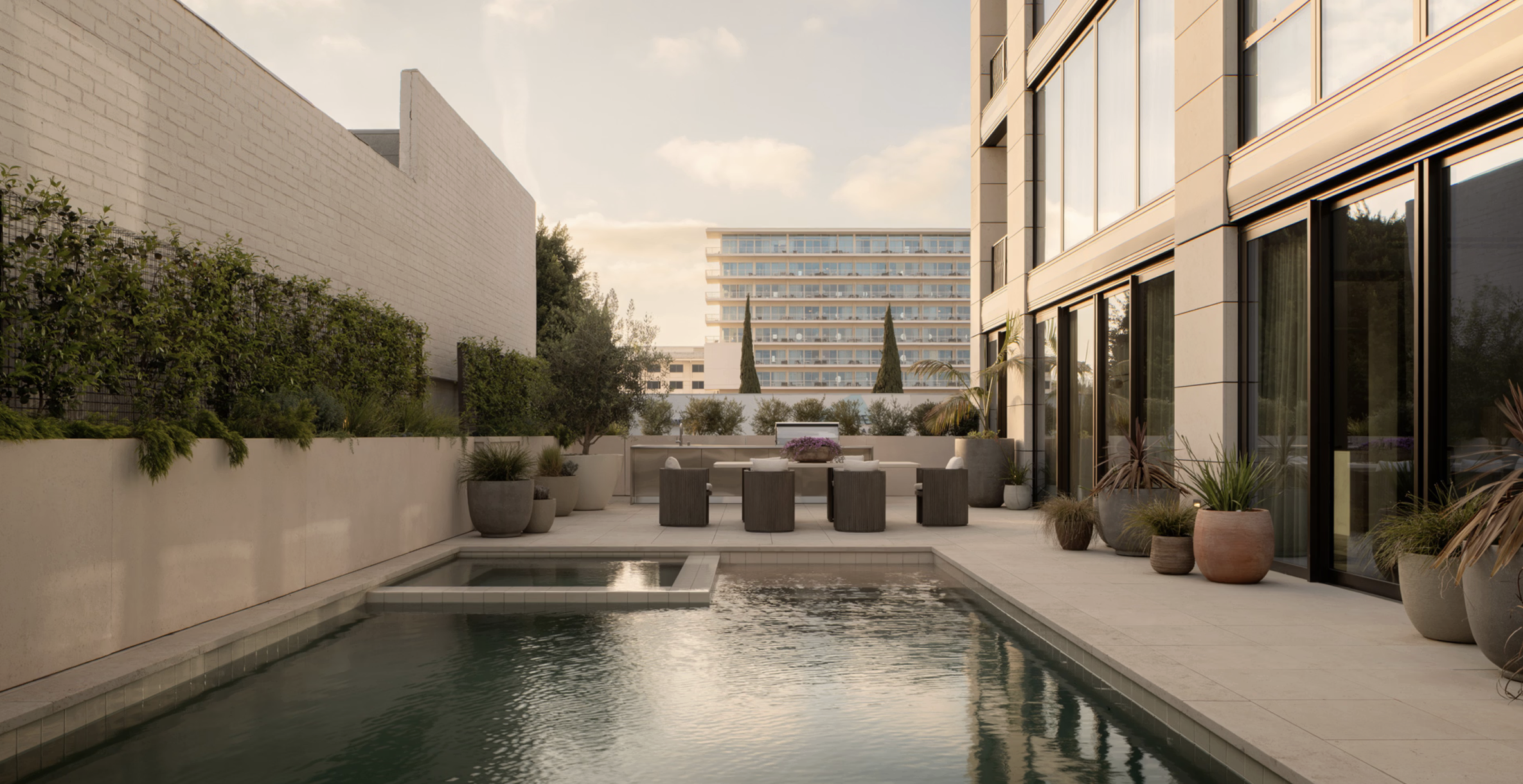
Mandarin Oriental Residences Beverly Hills Sets LA's New Price-Per-Square-Foot Record

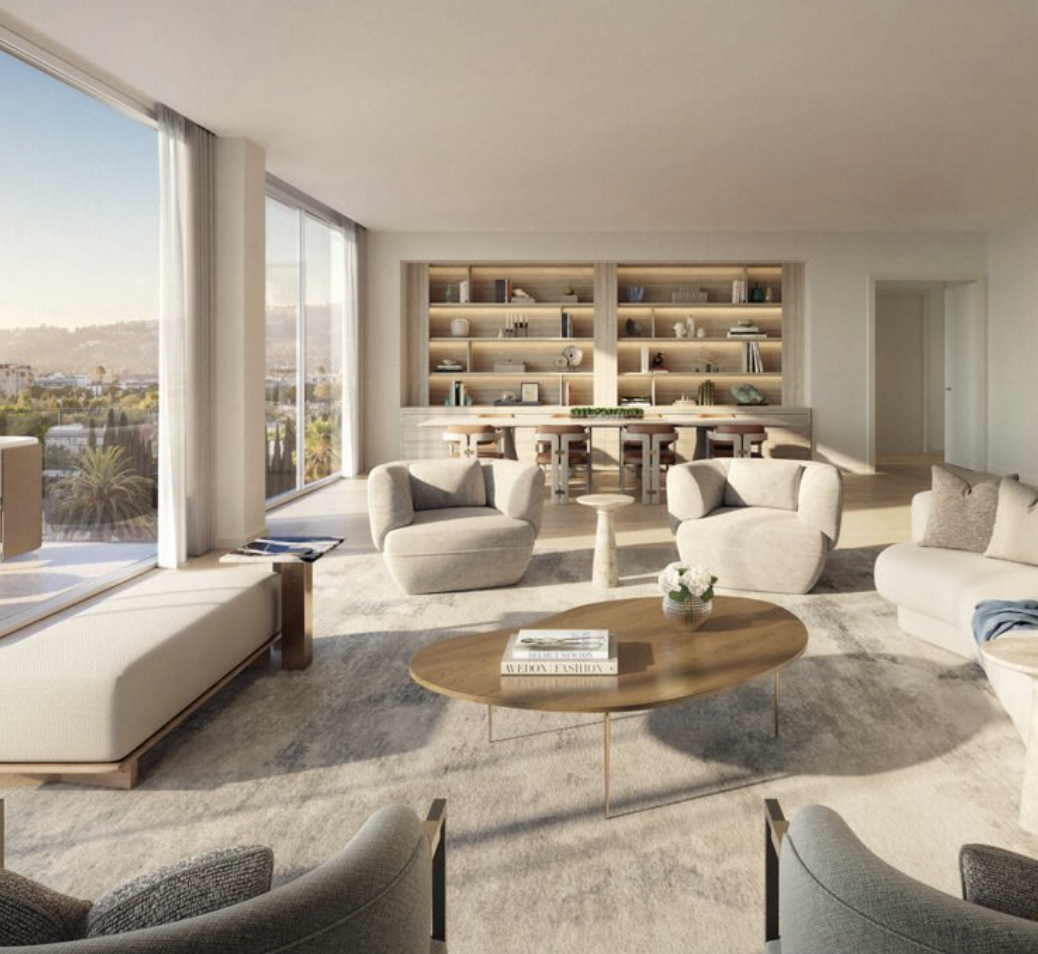
Beverly Hills branded residence penthouse living room with Hollywood Hills views

The Mandarin Oriental Residences Beverly Hills is a 44-unit ultra-luxury condominium building at 9200 Wilshire Boulevard in Beverly Hills, California, with residences priced from $2.6 million to over $13 million.

A $13.3 million penthouse just traded at 9200 Wilshire Boulevard in Beverly Hills — and the number that matters most isn't the price. It's the $3,852 per square foot it commanded, making it the most expensive condo sale by that metric in Los Angeles County so far in 2026.

The address? The Mandarin Oriental Residences. The story behind it? One that tells you everything about where the Beverly Hills luxury market is right now.

This sale doesn't exist in isolation. It's part of a larger shift driven by a category of real estate that has captured the attention of the world's most discerning buyers: branded residences. And in Beverly Hills and the surrounding corridor, no names carry more weight right now than Mandarin Oriental and Aman.

How a Default Became a Record Sale

The Mandarin Oriental Residences had an unusual journey to this moment. The 44-unit building at 9200 Wilshire went through a dramatic chapter when the original investor group — led by developer Michael Shvo — defaulted on a $200 million loan tied to the property. Centurion Real Estate Partners stepped in, acquiring the residences in a bulk transaction in September 2024.

What followed is a masterclass in repositioning. Centurion reset pricing by roughly 20 percent — bringing a one-bedroom to $2.6 million and a three-bedroom to $7.3 million — and relaunched the project with renewed momentum. Less than two years later, the penthouse closed at $3,852 per square foot, besting the WeHo Edition's January sale at $3,665 per square foot.

The penthouse itself — three bedrooms, four bathrooms, views of the Hollywood Hills, Beverly Hills and Century City, a butler's pantry, wraparound terrace and private roof deck — sold to a Beverly Hills resident.

The takeaway for buyers: a distressed situation at a world-class branded address, when handled by the right operator, doesn't diminish the product. It can reset value in your favor — and then the market catches up.

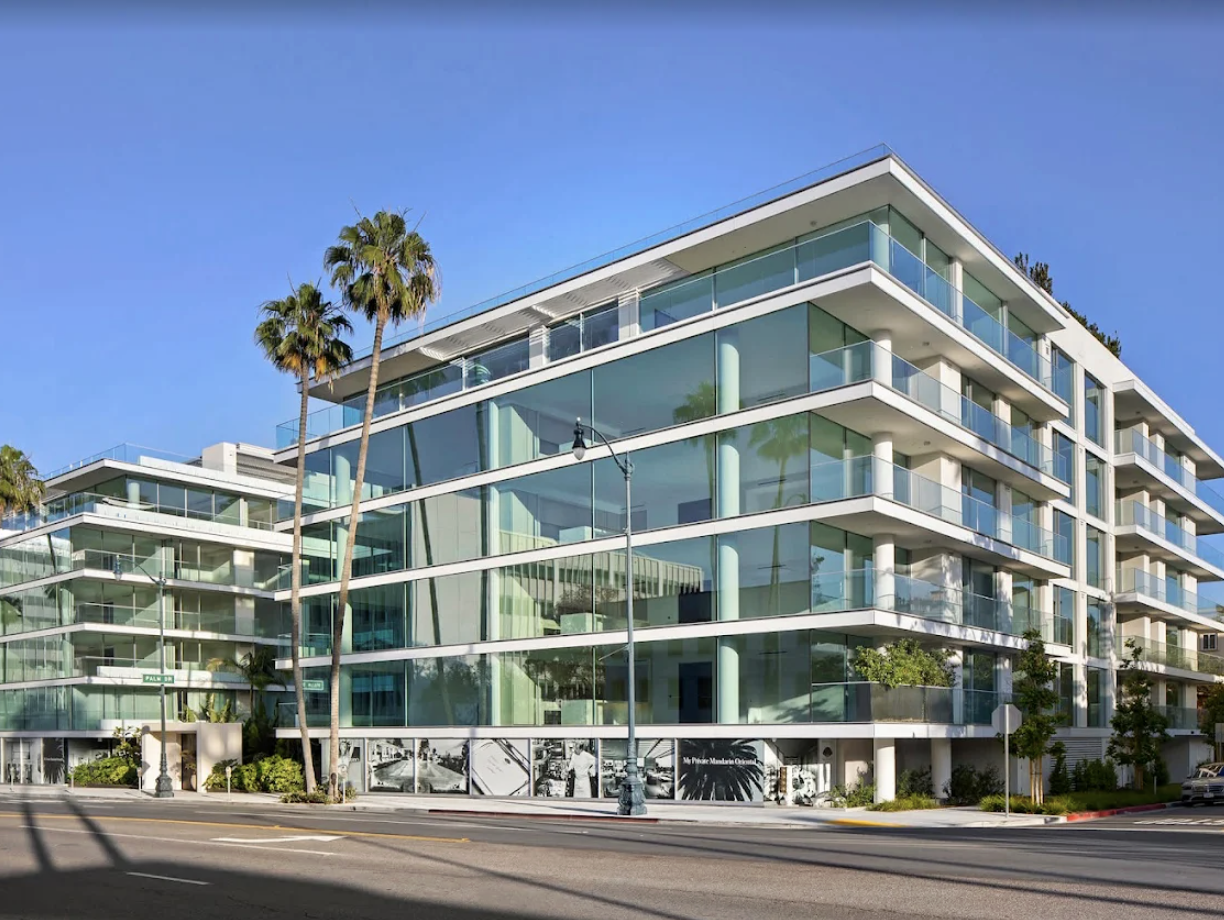
Mandarin Oriental Residences at 9200 Wilshire Boulevard Beverly Hills luxury condos

What Are Branded Residences — and Why Do Buyers Pay a Premium?

Branded residences are private homes — condominiums, penthouses, villas — that carry the name, design standards, and services of a world-renowned hospitality brand. Think Mandarin Oriental, Aman, Four Seasons, Rosewood. The brand isn't just a logo on the door; it's a promise of a certain level of finish, management, and lifestyle continuity that a standalone luxury condo simply cannot replicate.

Branded residences consistently command a price premium — often 25 to 35 percent above comparable unbranded luxury properties in the same market. The reasons are layered: hotel-grade services including concierge, housekeeping and spa access; design integrity maintained by the brand rather than left to individual owners; global name recognition that crosses borders and matters deeply to international buyers; and rental potential through brand channels that often outperforms the open market.

For the right buyer, a branded residence isn't just a home. It's a curated life — and an asset that tends to hold its value when others don't.

Aman Beverly Hills: The Most Anticipated Branded Residences in Los Angeles

If the Mandarin Oriental sale proves that the branded residence market in Beverly Hills is alive and closing at record prices, Aman Beverly Hills is the project that signals where it's going.

Aman is, by most measures, the most exclusive hospitality brand in the world. With fewer than 35 properties globally and a strict no-mass-market philosophy, an Aman address isn't available everywhere — which is precisely why it matters that Beverly Hills is getting one. The project represents a convergence of the brand's signature minimalist design ethos with one of the world's most coveted real estate markets.

Aman residences around the world — New York, Miami, Tokyo, Turks & Caicos — have become some of the most sought-after real estate on the planet. The brand's buyers are typically ultra-high-net-worth individuals who prioritize privacy, rarity, and a seamless integration of hotel-caliber living with residential ownership. They are not looking for a condo with a nice lobby. They are looking for a world that has been entirely curated for them.

For buyers tracking the Aman Beverly Hills residences pricing and availability, the Mandarin Oriental's record-setting sale is a meaningful data point. If a repositioned branded address — one that came to market after a default — can close a penthouse at nearly $4,000 per square foot, what does an Aman at first release command?

The Beverly Hills Branded Residence Landscape in 2026

The Mandarin Oriental and Aman aren't operating in a vacuum. The broader Beverly Hills and West Hollywood corridor has seen a wave of branded and ultra-luxury development that is fundamentally reshaping what's possible at the top of the market.

One Beverly Hills — the transformation of the former Robinsons-May site near the Beverly Hilton — is bringing a landmark mixed-use development with private residences to one of the city's most significant intersections. The WeHo Edition Residences at 9040 W. Sunset closed a penthouse in January 2026 at $3,665 per square foot, a direct comparable to the Mandarin Oriental's record. And the broader Wilshire Corridor — long the spine of LA's luxury condo market — is now anchored by a cluster of branded addresses that have repositioned it as a genuine world-class residential destination.

What you're watching is Los Angeles growing into a city whose luxury real estate can compete with New York, Miami, and the world's most sophisticated markets. The product is there. The buyers are there. The prices are proving it.

What This Means If You're Considering a Branded Residence Purchase

Buying a branded residence is a fundamentally different process than purchasing a traditional luxury home or condominium. A few things sophisticated buyers need to understand going in:

The brand matters — but so does the operator. The Mandarin Oriental story is instructive: the brand retained its integrity through a developer change and full repositioning. Not every branded project can say the same. Understanding who manages the building day-to-day is as important as the name on the door.

The fee structure is not like a traditional condo. Hotel-grade services have a cost. Monthly fees at branded residences are meaningfully higher than comparable unbranded properties. Buyers need to underwrite this fully and understand exactly what's included — and what isn't.

First-release opportunities carry both upside and risk. The strongest pricing in branded residence history has often come before the building opens, before comparable sales establish the market, and before international buyers arrive. But pre-construction purchasing requires careful contract review and an advisor who knows this specific niche.

More from the Branded Residences Collection

If Mandarin Oriental's 54-unit building feels too large, Rosewood Residences Beverly Hills takes intimacy further with just 17 estates, duplex penthouses from $30M, and Rosewood's full a la carte service menu.

For the complete picture of every branded residence option in Los Angeles, see my Branded Residences Collection -- pricing, amenities, and timelines across all nine properties.

Thinking About Beverly Hills Branded Residences?

I've spent years specializing in architectural and luxury homes across Los Angeles — including deep expertise in the branded residence category. Whether you're tracking Aman Beverly Hills, exploring One Beverly Hills, or trying to understand how branded residences fit into your broader real estate strategy, I'd love to talk.

This market moves quickly. The buyers who succeed in it are the ones who are educated, connected, and positioned before the market catches up to what they already know.

Debbie Pisaro | DRE #01369110 | debbiepisaro.com | (310) 362-6429

One Beverly Hills: Aman's West Coast Debut and LA's Most Ambitious Luxury Development

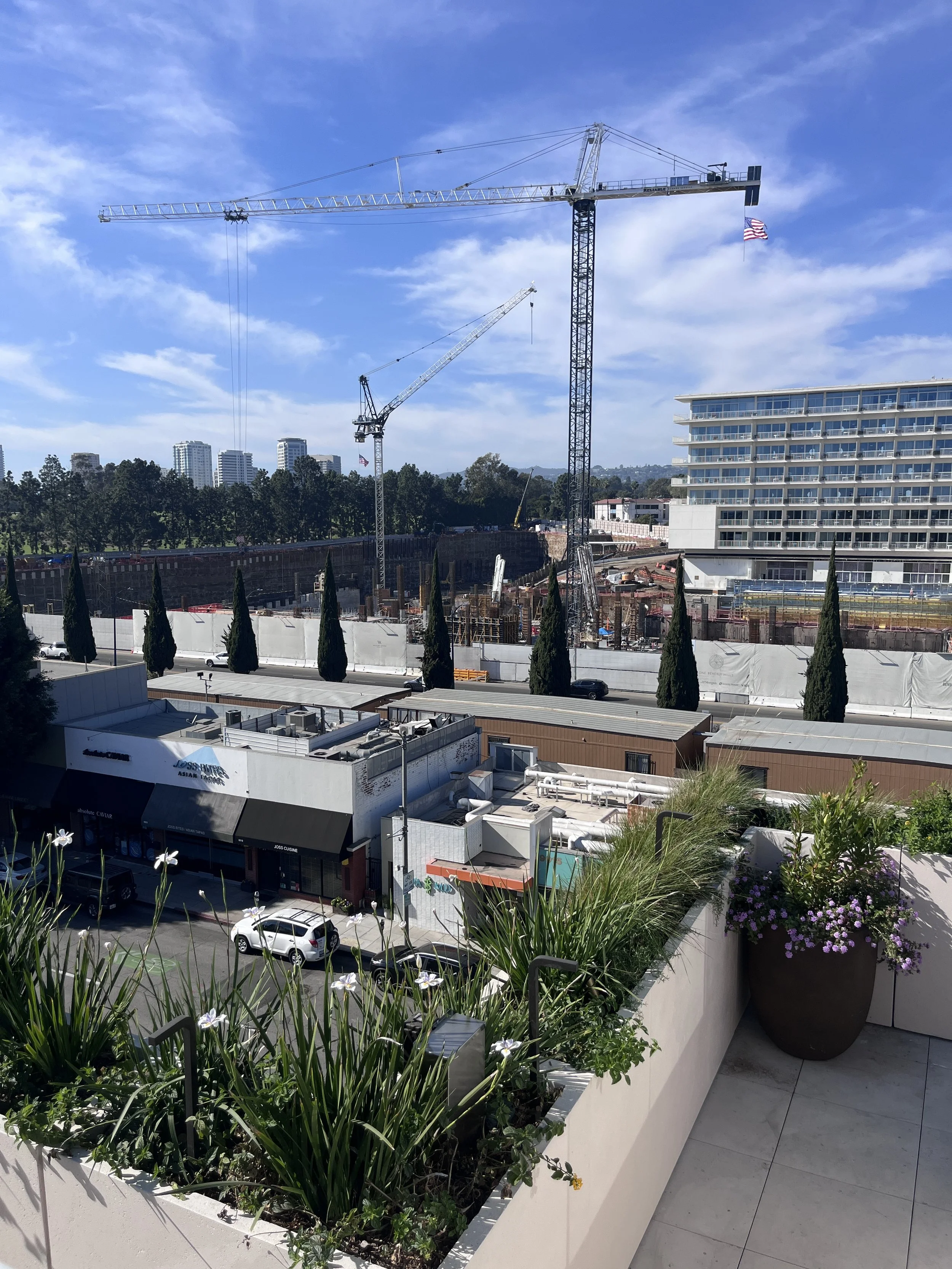
Aman Under Construction - A View from Rosewood Residences

One Beverly Hills is a 17.5-acre ultra-luxury mixed-use development at the corner of Wilshire and Santa Monica Boulevards in Beverly Hills, California, featuring Aman's first West Coast hotel, 138 private residences across two towers, and prices starting at $20 million.

If you've been following Los Angeles real estate—or if you're just someone who appreciates truly exceptional architecture—you've probably heard whispers about One Beverly Hills. This 17.5-acre development brings Aman's first West Coast property to LA, and it's not just another high-rise project. It's a complete rethinking of what urban living can look like in Los Angeles.

March 2026 Update

$4.3 Billion in Financing Secured — One Beverly Hills Is Fully Funded

On March 23, 2026, Cain International and Eldridge Industries finalized $4.3 billion in construction financing — among the largest real estate construction packages assembled in the past decade. The deal includes a $2.8 billion senior loan from JPMorgan Chase and a $1.5 billion mezzanine loan from Vici Properties, covering construction of up to 200 Aman-branded residential condominiums.

For buyers who've been watching from the sidelines: this is the signal that the project is real, funded, and on schedule. Phased delivery begins in 2028, positioned ahead of the Los Angeles Olympics.

Sources: The Real Deal, Bisnow, Commercial Observer — March 23, 2026

Located at the intersection of Wilshire and Santa Monica Boulevards (less than a mile from Rodeo Drive), One Beverly Hills is dedicating half its footprint to botanical gardens and green space. Yes, you read that right. In one of the most valuable real estate markets on the planet, more than half the property will be gardens.

The development seamlessly integrates the existing Beverly Hilton and Waldorf Astoria with Aman's 78-suite hotel, two residential towers, a 100,000-square-foot private club, and luxury retail including Dolce&Gabbana, Los Mochis, and Casa Tua Cucina.

As someone who specializes in Los Angeles branded residences, I've been tracking this project closely. Let's break down what makes One Beverly Hills worth paying attention to.

What Is Aman (And Why Does It Matter)?

For those unfamiliar, Aman is one of the world's most exclusive hospitality brands. The name comes from the Sanskrit word for "peace," and the properties—from Bali to Utah—are known for exceptional design, privacy, and a focus on tranquility over flash.

Aman Beverly Hills marks the brand's entry into the Los Angeles market, and it's significant for a few reasons:

It's bringing high-rise luxury to a city that's historically resisted it. LA has always favored sprawling estates over vertical living. This project challenges that assumption—and judging by early sales, buyers are responding.

It's not just a hotel. Aman Beverly Hills includes 78 all-suite hotel rooms, two residential towers, and a 100,000-square-foot private club. It's a full lifestyle ecosystem, not just a place to stay or live.

It's redefining what "urban sanctuary" means. The property dedicates eight acres to lush botanical gardens designed by RIOS, featuring over 200 species of native and adaptive plants. This isn't token greenery—it's a deliberate celebration of California's biodiversity.

🌿 The One Beverly Hills Vision: A Complete Campus

One Beverly Hills spans 17.5 acres at the western gateway to Beverly Hills, adjacent to the Los Angeles Country Club. The site has history—it was once home to the Beverly Hills Nursery, a horticultural landmark that supplied Southern California with plants for decades.

That legacy isn't being erased. It's being elevated.

The Complete Development Includes:

Aman Beverly Hills - The star attraction with 78 all-suite hotel rooms, 138 residences across two towers (28 and 31 stories), and a 100,000-square-foot private club

The Beverly Hilton - Completely restored and upgraded, maintaining its legacy as one of LA's premier event venues (home of the Golden Globes)

Waldorf Astoria Beverly Hills - Seamlessly integrated into the campus

Luxury Retail & Dining - Including Dolce&Gabbana, Los Mochis (coastal Mexican), and Casa Tua Cucina (Northern Italian)

10 Acres of Botanical Gardens - More than half the property dedicated to green space, with 4.5 acres publicly accessible

The landscape design, led by RIOS, draws inspiration from California's diverse ecosystems:

  • Shaded oak ridges

  • Bright coastal meadows

  • Pollinator gardens with butterflies and hummingbirds

  • Two miles of walkways, trails, sitting areas, and water features

  • Over 200 species of native and adaptive plants

This isn't just aesthetics. It's a statement about what luxury development can—and should—prioritize.

The masterplan also creates new pedestrian walkways and bike lanes throughout the campus. It's rare to see a project of this scale that values connectivity and green space as much as it does built density.

The Architecture: California Modernism Goes Vertical

Designed by Kerry Hill Architects, Aman Beverly Hills celebrates the simplicity and elegance of California's modernist design tradition. Think clean lines, neutral palettes, natural materials, and an emphasis on indoor-outdoor flow.

The two residential towers rise 28 and 31 stories—modest by New York or San Francisco standards, but significant for LA. Floor-to-ceiling glass frames views from the Hollywood Hills to downtown, Century City to the Pacific Ocean.

But here's the standout detail: every residence includes expansive terraces with private pools.

Yes, private pools. In the sky.

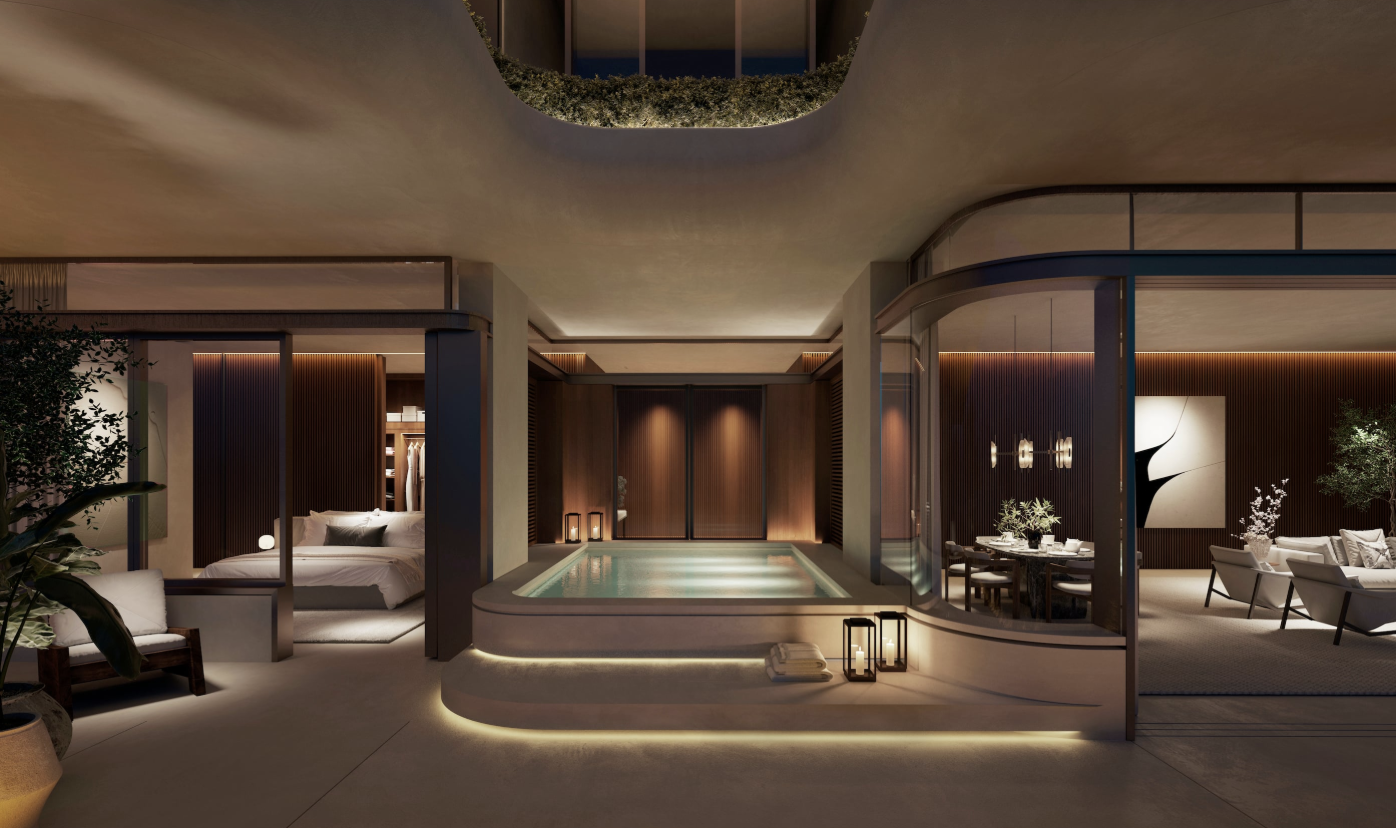
It's the kind of amenity that bridges California's love of outdoor living with the convenience of high-rise life. You're 300 feet in the air, but you can still dive into your own pool surrounded by greenery.

Foster + Partners led the overall masterplan, seamlessly integrating the site with the Beverly Hilton and Waldorf Astoria. The result is a campus that flows—walkable, bikeable, and designed for both residents and the public.

The Residences: What You're Actually Getting

Let's talk numbers and layouts, because this is where it gets real.

Residences range from:

  • 3,100-square-foot two-bedroom homes

  • Up to 10,500-square-foot sky mansions

  • Penthouses reaching 25,000 square feet

To put that in perspective, many single-family estates in Beverly Hills don't offer that kind of square footage.

What makes these different from typical luxury condos:

Private pools on every terrace. Not a shared amenity—your own pool, your own outdoor space.

Lofty interiors with floor-to-ceiling glass. Natural light, views, and that essential California indoor-outdoor connection.

Artisan craftsmanship throughout. High-quality finishes, natural materials, and thoughtful design details.

Hotel-level services. Maintenance, concierge, valet—everything is handled. For buyers splitting time between multiple cities, this is a huge operational advantage.

Access to the Aman Club. Dining, wellness, cultural programming, and a private social space reserved for residents and select Aman partners.

The residences are designed to feel like sanctuaries. Whether you're watching the sunset over the Pacific or seeing downtown LA light up at night, the views are undeniably LA.

More from the Branded Residences Collection

Want the full breakdown on unit types, pricing, and what it's like inside? Read my complete guide to Aman Beverly Hills ultra-luxury condos.

For a side-by-side look at how Aman compares to Rosewood, Mandarin Oriental, Four Seasons, and six other branded residences in LA, visit my Branded Residences Collection.

The Aman Club: 100,000 Square Feet of Private Membership

This isn't just a gym with a yoga studio. The Aman Club is a 100,000-square-foot private members club designed exclusively for residents and select Aman partners.

What's included:

Curated dining experiences. Reflecting California's farm-to-table ethos and LA's position as a global culinary destination.

Holistic wellness programming. Beyond typical fitness—this is Aman's approach to health and well-being.

Cultural programming. Art exhibitions, screenings, lectures, and events that celebrate creativity and connection.

Private social spaces. Both intimate lounges and larger venues for gatherings and celebrations.

The Club is where community happens. It's the living room for the entire development, designed for residents who value access, curation, and privacy in equal measure.

The Market Reality: Record Pricing, Strong Demand

Here's where my real estate expertise comes in, because the numbers tell an interesting story.

Pricing starts at $20 million.
Average cost per square foot: $7,000 — a Southern California record.
First tower: Already 60% under contract and in reservation.

Construction began in February 2024. The project is opening in phases starting in 2027, with full completion expected by the 2028 Olympics.

What does this tell us?

The market for ultra-luxury, high-rise living in LA is not just strong—it's hungry. For years, conventional wisdom held that Angelenos wouldn't embrace vertical living the way New Yorkers or San Franciscans have. Aman Beverly Hills is proving that assumption wrong.

Understanding what drives California luxury buyer psychology in 2026 helps explain why this project is resonating so strongly with UHNW buyers.

Why buyers are responding:

Timing. LA is experiencing a renaissance ahead of the 2028 Olympics, with billions being invested in infrastructure and new luxury developments transforming the skyline.

Turnkey luxury. Unlike a traditional estate, these residences come with hotel-level services, maintenance included, and the option to participate in Aman's rental program when you're not in residence. For buyers splitting time between multiple cities, this is a huge advantage.

Location. You're less than a mile from Rodeo Drive, adjacent to the Los Angeles Country Club, and positioned at one of Beverly Hills' most prestigious addresses. The convenience factor alone is worth millions to buyers who value their time as much as their square footage.

Scarcity. There are only so many residences being built, and they're already selling at a pace that suggests demand will outlast supply. In a city where new luxury inventory is limited by geography and zoning, scarcity drives value.

Timeline: Building Toward 2028

Construction began: February 2024
Phased opening: Starting in 2027
Full completion: Expected by the 2028 Olympic Games

LA is preparing to welcome the world, and developments like Aman Beverly Hills represent the city's evolution into a truly global destination for luxury living. The 2028 Olympics will showcase a Los Angeles that has invested in infrastructure, embraced thoughtful density, and created destinations worthy of a world-class city.

For buyers, this timeline creates opportunity. Early reservations lock in pricing and selection, and you're buying into a development that will benefit from the billions being invested in LA's infrastructure ahead of the Games.

🌅 What It Actually Looks Like to Live at One Beverly Hills

Let me paint you a picture.

You wake up in your Aman residence, where floor-to-ceiling windows frame views of the Pacific catching morning light. You step onto your 2,000-square-foot terrace and dive into your private pool before most of LA has hit snooze for the second time.

After a workout in the Aman Club's facilities, you take a morning walk through the botanical gardens—two miles of walkways, native sage, lavender, and California breeze. You grab coffee at one of the ground-floor cafés, then head back upstairs to take a call with Tokyo or London. The views make even business feel aspirational.

For lunch, you meet a friend at Los Mochis for coastal Mexican cuisine or Casa Tua Cucina for Northern Italian. You could also walk over to the Beverly Hilton for a business lunch—it's all part of the same campus. The afternoon might include browsing Dolce&Gabbana's boutique or reading by your pool while hummingbirds visit the flowering plants cascading from your terrace.

Evening brings options: a private screening in the Aman Club's cinema, a wine tasting featuring California vintners, or dinner at the Club's main restaurant before friends come over for cocktails on your terrace, where the city lights create their own constellation beneath you.

This is the promise of One Beverly Hills—luxury without pretense, community without compromising privacy, and a lifestyle that's unmistakably Californian.

The Investment Perspective: Beyond the Price Tag

I'm often asked whether developments like Aman Beverly Hills represent good investments. The answer isn't simple, but here's my take.

What you're buying:

  • A piece of one of the most ambitious developments in LA history

  • A location that cannot be replicated

  • A brand (Aman) that commands premium valuations worldwide and has demonstrated strong value retention in other markets

If you're wondering how Aman compares to other luxury brands in LA, I've written a comprehensive comparison of Aman vs. Pendry vs. Four Seasons that breaks down the differences in detail.

Scarcity factor: There are only so many residences being built, and they're selling at a pace that suggests demand will outlast supply. In a city where new luxury inventory is limited by geography, zoning, and development costs, scarcity drives value.

Operational advantages: Unlike a traditional estate, these residences come with hotel-level services, maintenance included, and the option to participate in Aman's rental program when you're not in residence. For buyers splitting time between multiple cities or countries, this represents real monetary value.

Lifestyle dividend: Some investments you make purely for financial return. Others pay dividends in quality of life, community, and daily satisfaction. Aman Beverly Hills offers both.

That said, ultra-luxury real estate is not a liquid asset, and market conditions can shift. If you're considering a purchase at this level, it should align with your lifestyle goals as much as your financial strategy.

🌴 Why This Development Matters for LA

Aman Beverly Hills represents something bigger than luxury real estate. It's a statement about what Los Angeles can be—and what developers can prioritize when they're willing to think long-term.

It celebrates nature without sacrificing density. Half the property is dedicated to gardens and green space. You don't have to choose between building and preserving—you can do both thoughtfully.

It honors California's architectural legacy. The design pays homage to modernist principles—indoor-outdoor flow, natural materials, clean lines—while pushing the language into new territory.

It creates community while respecting privacy. The Aman Club offers connection. The residences offer sanctuary. Both matter.

It proves high-rise living can work in LA. For years, developers assumed Angelenos would never embrace vertical living. Aman Beverly Hills is changing that narrative with design that feels distinctly Californian—not imported from New York or Miami.

This is what evolution looks like. LA doesn't have to lose its soul to grow. It just has to grow intentionally.

Final Thoughts

One Beverly Hills—with Aman as its centerpiece—is ambitious without being arrogant, luxurious without being ostentatious, and distinctly Californian in its celebration of nature, light, and connection.

Whether you're a potential buyer, a real estate enthusiast, or simply someone who appreciates great architecture, this is a development worth watching. It represents not just the future of luxury living in LA, but a vision of what urban life can be when developers prioritize beauty, sustainability, and community alongside density and profit.

And as someone who believes Los Angeles is just beginning to realize its potential as a world-class city, I'm excited to see what happens when One Beverly Hills opens its doors in 2027.

Want to learn more about One Beverly Hills, Aman residences, or other luxury developments transforming Los Angeles?

📞 Call me: (310) 362-6429
📩 Email: Contact Coastline 840
🌐 DRE #01369110

Serving Studio City, Los Feliz, Silver Lake, the Eastside, Brentwood, and Malibu — with "California Always" expertise across the state.

Looking for real estate opportunities beyond Los Angeles? Visit Coastline 840 — we cover the entire California Golden State, one home at a time.

Related Reading

Explore more luxury real estate insights:

The California Branded Residences Series

Los Angeles and California Branded Residences

Branded residences are the fastest-growing category in California luxury real estate. Debbie Pisaro covers the full landscape, each property tracked individually, never conflated, with pricing, floor plans, and availability that often never reaches the public MLS.

Related: California Architectural Homes Guide

Written by Debbie Pisaro, a California branded residence specialist covering every major Los Angeles and California project. Coastline 840 | Side, Inc. · California DRE #01369110
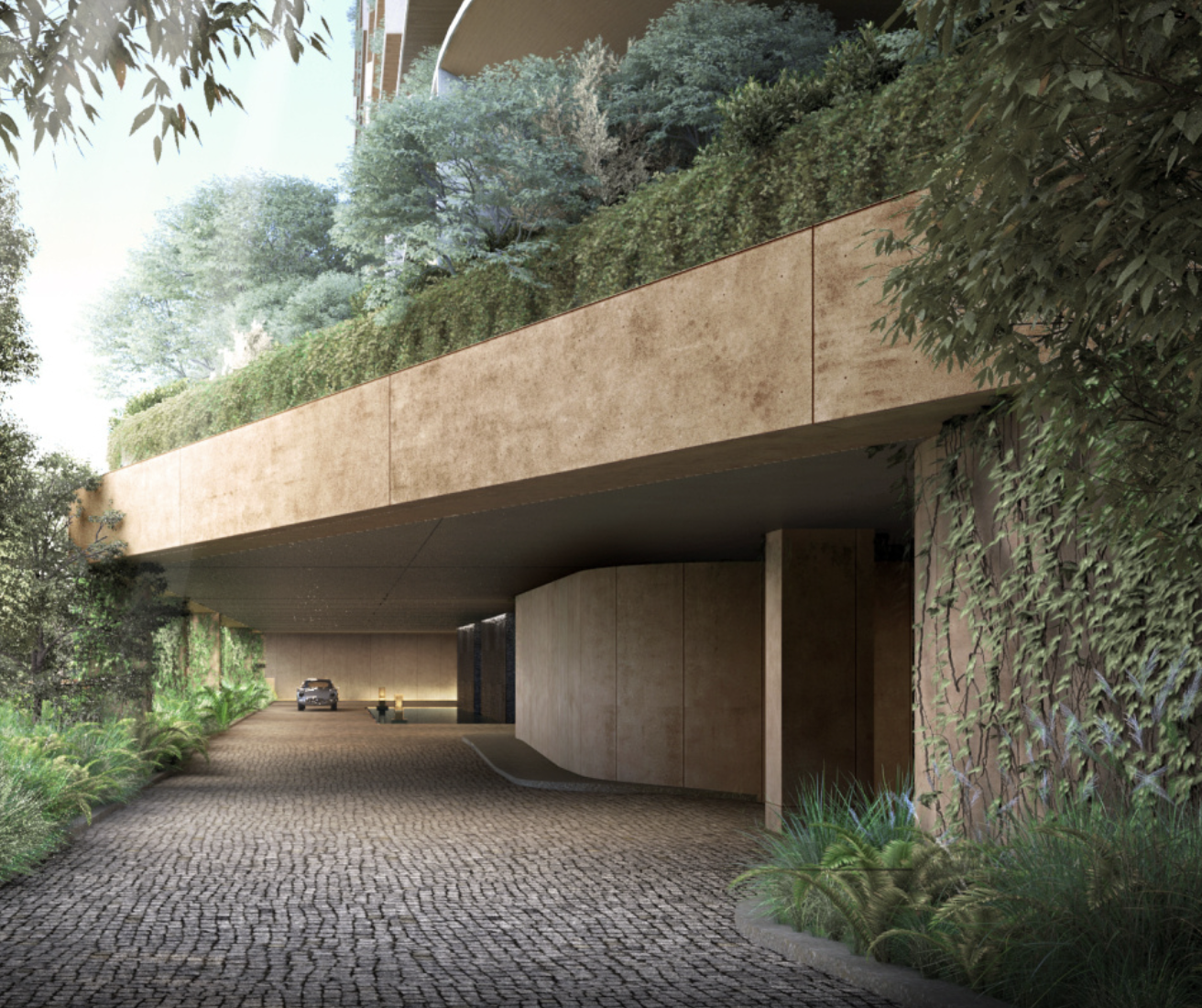
Studio City Farmers Market Guide: What to Buy, Where to Park, and How to Make a Morning of It

If you want to understand a neighborhood, go to its farmers market.

The Studio City Farmers Market on Ventura Place is one of those “this is why people move here” spots—part grocery run, part social hour, part Sunday ritual. Open every Sunday from 8 a.m. to 1 p.m., year-round, it stretches along Ventura Place between Laurel Canyon Boulevard and Radford Avenue.

Here’s how to do it like a local: what to buy, where to park, and how to make a full Studio City morning out of it.

Where It Is and When to Go

  • Location: Ventura Place between Laurel Canyon Blvd and Radford Ave, Studio City, CA 91604

  • Hours: Sundays, 8 a.m. – 1 p.m., rain or shine

  • Who runs it: A non-profit market jointly created by the Studio City Residents Association and Studio City Chamber of Commerce Foundation

Pro tip on timing:

  • 8–9 a.m.: Best for serious shoppers and introverts—easy to move around, more parking.

  • 10–11:30 a.m.: Peak social hour, live energy, kids everywhere.

  • 12–1 p.m.: Quieter again, but some items may be sold out.

Where to Park (and How to Avoid Circling Forever)

You have a few options:

  • CBS / Radford parking garage: Often used by market visitors—look for signage near Radford.

  • Chase Bank parking lot area: Some guides mention this as overflow/shared parking during market hours.

  • Street parking: Surrounding streets offer metered and unmetered spots—check signs carefully.

If you’re coming with kids and gear, it’s worth doing one loop past Ventura Place to see what’s available nearby, then defaulting to the Radford/CBS structure if it looks busy.

What to Buy: The Short List

The market is known for being more than just produce—you’ll find fresh foods, hot meals, and local artisans.

A few categories to prioritize:

1. Produce and Pantry Staples

  • Seasonal fruit and vegetables from local farms

  • Great citrus, berries, and stone fruit in season

  • Eggs, honey, olive oil, and breads you’ll use all week

This is the part that turns the Studio City Farmers Market into your Sunday meal-planning hack: shop once, cook smarter all week.

2. Ready-to-Eat Breakfast (and Take-Home Lunch)

Many vendors offer hot food that doubles as breakfast-on-the-spot and lunch-to-go:

  • Crepes, tamales, sausages, and breakfast-y plates

  • Fresh juices and coffee

  • Baked goods you can “accidentally” buy too many of

More than one local has built a Sunday routine of breakfast at the market, lunch in the bag, and a very relaxed afternoon.

3. Specialty and Treat Vendors

Depending on the week, you’ll find:

  • Small-batch soups, pickles, and condiments

  • Fresh pasta, cheeses, and sometimes prepared mains

  • Handmade goods and gifts (great for last-minute hostess gifts)

If you’re new to Studio City or just moved into the neighborhood, this is also a low-pressure way to discover local vendors and small businesses you’ll see again around town.

Kid-Friendly (But Not Dog-Friendly) Tips

A few important details if you’re bringing little ones:

  • The market is very kid-friendly, with pony rides, a petting zoo, train rides, and bouncy slides on the adjacent lawn—excellent bargaining chips if you’re hoping for a meltdown-free produce run.

  • Pets are not allowed inside the official market area, but there is often free pet-sitting through Petopia on the nearby lawn, so you can still bring your dog for the outing without taking them through the stalls.

If you’re testing whether Studio City is a good fit for your family, a Sunday at the market is a pretty clear snapshot of the neighborhood’s kid energy and community feel.

How to Make a Morning of It

Here’s a simple Studio City Sunday flow you can steal:

  1. Get there by 9 a.m.
    Easier parking, cooler temps, and shorter lines at your favorite breakfast stall.

  2. Do a slow “scout lap” first
    Walk the full length of Ventura Place before buying anything. Note which stands you want to come back to—that way you don’t fill your bags in the first 50 feet.

  3. Breakfast + bench time
    Grab breakfast from one of the hot food vendors, then sit on the adjacent lawn or at a table to people-watch. This is where you really see the blend of Studio City families, creatives, and long-time locals.

  4. Serious shopping second
    Hit produce, proteins, and pantry items after you’ve eaten. Think in meals:

    • One easy pasta or grain bowl

    • One sheet-pan or grill dinner

    • One “fancy” mid-week meal you’re actually excited to cook

  5. Walk Ventura or nearby streets after
    If you’re getting to know the neighborhood, stroll down Ventura Boulevard or drift into one of the nearby residential pockets for a bit of house-spotting before you head home.

Why the Studio City Farmers Market Matters If You’re House-Hunting

When I’m working with buyers who are thinking about Studio City, I almost always suggest a Sunday at the market:

  • You see how walkable the area feels once you’re out of the car

  • You get a sense of who lives here—families, singles, dog people, creatives, studio folks

  • You start to picture yourself in a Studio City Sunday rhythm: coffee, market, walk, home

Real estate is always about more than the house. It’s about your routines.

Thinking About Buying or Selling in Studio City?

Whether you’re dreaming of a Studio City home you can walk to the farmers market from, or you’re ready to sell and want to highlight how close you are to Ventura Place and everything around it, I’m happy to help you think through your options.

We can start with a Sunday at the market and see where the conversation goes.

Keep Reading About Studio City

-Thinking of Buying or Selling in Studio City? Here's What to Know

-A Perfect Sunday in Studio City

-What You Can Buy in Studio City: A Look at Homes from $1M to $3M+]

-Top Private Schools Near Studio City: A Local Parent’s Guide

-If you’re thinking of selling in Studio City, don’t miss this

For everything you need to know about buying or selling in Studio City, visit the Studio City Real Estate Guide.

Case Study: How We Sold a Design-Forward Studio City Mid-Century View Home in 10 Days

When people search for a Studio City real estate agent to help them sell a design-forward home, what they really want is someone who understands both the architecture and the numbers. This case study walks through how we sold a Studio City mid-century view home in just ten days—without turning our clients’ lives upside down.

If you’ve been wondering how to sell a mid-century home in Studio City without moving into a hotel or doing a full gut remodel, this is exactly the kind of strategy you can use.

The Sellers and Their Next Chapter

My clients were a creative couple who had spent years lovingly updating their Studio City hillside home. Think:

  • Original mid-century bones with warm wood, clerestory windows, and a classic fireplace

  • Thoughtful updates in the kitchen and baths

  • An easy indoor–outdoor flow that made the most of the views

They weren’t “flippers.” They were stewards. And now, a new job opportunity was pulling them to the East Coast on a clear timeline.

Their priorities were simple and very Studio City:

  • Maximize the sale price of a one-of-a-kind Studio City view home

  • Protect their time and privacy during the process

  • Keep stress to a minimum so they could actually plan their move

They needed a design-focused Studio City real estate agent who could act as their advocate and run point with stagers, vendors, lender, and escrow.

The Challenge: A Special Home in a Competitive Studio City Market

The property sat in the hills above Studio City—close enough to everything, high enough for real views. It was the kind of house buyers describe when they say:

“We want a mid-century with character, light, and views… but also a nice kitchen.”

The challenge?

  • Studio City buyers are savvy and see a lot of homes.

  • Inventory for truly special mid-century homes is limited, which can create both opportunity and pressure.

  • Our timeline was tight: we needed a strong result without a long on-market story.

We had to position the property as a design-forward Studio City view home worth competing for—and make sure the process felt manageable for the sellers.

Strategy: Lead With Design, Back It Up With Data

1. Treat It Like an Architectural Listing

Instead of marketing the home as “just another three-bedroom,” we framed it as a Studio City mid-century modern home with:

  • Original architectural details

  • A layout that actually works for how people live now

  • Outdoor spaces that extend the living room, not just a patch of grass

We planned photos, copy, and staging to highlight the architecture first, then the upgrades.

2. Price for Momentum, Not Regret

Because mid-century homes in Studio City hills don’t all look the same, we couldn’t just run an average price-per-square-foot and call it a day. I:

  • Pulled comps for architectural and mid-century homes in Studio City, not just any 3-bed sale

  • Factored in the views, updates, and lot position

  • Checked in with a trusted lender partner to understand where likely buyers would be most comfortable from a monthly-payment perspective

The goal was to land on a price that:

  • Looked compelling in search results

  • Left room for buyers to compete

  • Felt solid enough that my sellers wouldn’t wake up the next morning thinking, “We underpriced that.”

3. Build the Right Team Around the Sellers

I also put together a small, experienced team so my clients didn’t have to play project manager:

  • A stager who understands mid-century lines and knows how to edit, not erase

  • A lender contact who could move quickly when offers came in and call the listing agent to vouch for qualified buyers

  • A solid escrow officer used to handling hillside and older home issues

The through-line: my job as a Studio City real estate agent is not just to put a sign in the yard—it’s to coordinate a team that protects the client’s time, money, and nervous system.

Preparing the Home: Light Touch, Big Impact

Because the house was already quite beautiful, we focused on high-impact, low-drama adjustments:

  • Simplified and edited furniture to let the architecture breathe

  • Dialed in lighting and small styling details that photograph well

  • Knocked out a short, realistic repair list rather than opening a massive renovation loop

I walked the house with the stager and my clients and created a simple, prioritized checklist:

  1. Must-do items that support value (touch-up paint, small repairs, curb appeal)

  2. Nice-to-do if time allows

  3. Things we deliberately didn’t do, so the sellers didn’t burn out before day one

This approach allowed us to bring a polished Studio City view home to market without asking the sellers to disappear for weeks.

Marketing the Home: Showcasing Studio City Design

When we launched, everything was built to speak directly to the right buyers—design-conscious Studio City shoppers who value architecture and views.

Listing photos and copy emphasized:

  • The mid-century lines and original details

  • How the main living spaces connect to decks and outdoor areas

  • The “everyday luxury” of natural light and a calm, elevated setting

We didn’t oversell. We told the truth in a way that was compelling, design-forward, and respectful of what the sellers had created.

Behind the scenes, I made sure:

  • The lender partner was fully briefed and ready to respond quickly

  • The escrow officer had a heads-up about anything quirky in title or past permits

  • Buyer agents knew they could call me directly for information, instead of peppering the sellers with questions

Negotiation: Multiple Offers and Clear Advocacy

Within 10 days, we had multiple offers—two above asking.

This is where the role of a Studio City real estate agent who knows the architecture and the market becomes crucial. Price is only one part of the story.

We looked at:

  • Strength of financing and verification from the lender

  • Contingency timelines and how realistic they were

  • Buyer flexibility on close date and possible rent-back

  • The overall likelihood of a smooth escrow vs. constant renegotiation

I advocated hard for my clients by:

  • Negotiating a strong price that reflected the home’s architectural value and Studio City location

  • Securing an as-is sale with a capped repair credit, so we weren’t reopening negotiations over minor items later

  • Building in a short rent-back period, which gave the sellers breathing room between this sale and their East Coast purchase

Escrow: Protecting the Deal (and the Clients)

Once we opened escrow, things moved quickly—but not blindly.

  • The lender and I stayed in close contact to stay ahead of any underwriting questions.

  • When the appraiser had follow-up questions about value, I provided targeted comps for Studio City mid-century view homes rather than generic sales.

  • The escrow officer helped us navigate the usual hillside-home paperwork calmly and efficiently.

Whenever something came up, my clients heard from me in plain language:

  • Here’s what’s happening

  • Here’s what I’ve already done

  • Here’s what I recommend next

They didn’t have to chase down answers, argue with vendors, or spend hours on the phone with strangers. That’s what an advocate is for.

The Outcome

  • Time on market: 10 days

  • Interest: Strong showings and multiple offers

  • Final price: Above asking, with favorable terms

  • Repairs: Capped credit; no endless renegotiation

  • Client experience: A smooth, professional exit from a beloved Studio City home and a clear path to their next chapter on the East Coast

For search and for real humans, this is a clear example of how to sell a house in Studio City when it’s not just any house—it’s a design-forward, mid-century view home.

Takeaways for Studio City Homeowners Thinking About Selling

If you own a mid-century or architectural home in Studio City, a few lessons from this case study:

  • You don’t need to “flip” your house to get a strong result. You need targeted prep and smart staging.

  • Pricing isn’t just about square footage—it’s about architecture, views, and how your home lives day to day.

  • The right team (agent, stager, lender, escrow) can protect your time and stress level while still pushing for top dollar.

  • Working with a design-focused Studio City real estate agent who understands both homes and humans can make the difference between “we survived that” and “we’re so glad we did it this way.”

Thinking About Selling Your Studio City Home?

If you’re considering a next chapter in Studio City and you’d like to talk through what selling your home could look like—whether it’s a mid-century view home, a character-filled ranch, or something in between—I’m happy to walk through your options.

No pressure, no hard sell—just a clear-eyed look at your home, your timeline, and what’s possible.

Keep Reading About Studio City

-Thinking of Buying or Selling in Studio City? Here's What to Know

-A Perfect Sunday in Studio City

-What You Can Buy in Studio City: A Look at Homes from $1M to $3M+]

-Top Private Schools Near Studio City: A Local Parent’s Guide

-If you’re thinking of selling in Studio City, don’t miss this

Ready to sell your Studio City home? Start with the Studio City Real Estate Guide or go straight to selling your Studio City home.

Why Staging Matters: The Studio City Standard

First Impressions Happen Online

In today’s Studio City market, most buyers decide whether they’re interested in a home before they ever step foot inside. That first impression happens online — through listing photos, 3D tours, and short-form video.

Professional staging ensures your home photographs beautifully, flows naturally, and feels move-in ready from the first image. It transforms a static MLS listing into a visual story. When every scroll brings another “maybe,” staging makes yours the one that feels like a yes.

The Psychology Behind the Perfect Setup

Staging is about more than pretty furniture. It’s a design strategy rooted in buyer psychology — understanding how people move through a space and what makes them feel at home.

When done right, staging draws attention to natural light, ceiling height, and the kind of flow that Studio City buyers love. It highlights the lifestyle behind the architecture — the quiet coffee moment by the window, the dinner with friends that spills onto the patio, the perfect afternoon light in the living room.

That’s why staging matters: it helps buyers feel something real before they’ve even made an offer.

The Studio City Buyer Mindset

Studio City’s buyer pool is diverse, but one thing unites them: design awareness. Many are entertainment professionals, young families, or creative entrepreneurs who appreciate the aesthetic as much as the address.

→ Link A Perfect Sunday in Studio City

They’re drawn to architectural detail — the post-and-beam lines of Fryman Estates, the warmth of mid-century ranches in Colfax Meadows, or the clean modernism tucked into the hills above Ventura Boulevard.

When a home is staged thoughtfully, it meets these buyers where they are. It feels familiar but aspirational — a place they can picture themselves thriving.

Designing for the Studio City Lifestyle

Great staging in Studio City mirrors the neighborhood itself: elevated but relaxed, sophisticated but never overdone. Think California-casual layers — linen, oak, clay, soft light, a few sculptural forms.

It’s not about making a home look like a showroom. It’s about curating moments that feel lived in but intentional. A throw over a chair, a book left open, a vase with simple greenery — these touches make rooms feel warm, not staged.

That balance of polish and ease defines the Studio City aesthetic and the lifestyle buyers are willing to pay more for.

Why Empty Homes Fall Flat

Even the most beautiful architecture feels smaller and colder when a home is empty. Without furniture to provide scale or a sense of purpose, buyers struggle to imagine how their life might fit into the space.

Staging reintroduces warmth and proportion. It helps define how spaces relate to one another and allows buyers to see a clear vision of function — where to gather, relax, work, or host.

When buyers have to work to visualize potential, they hesitate. When a space already feels like home, they act.

The ROI of Great Presentation

According to the National Association of Realtors, staged homes sell faster and for more money — often 5–10% above un-staged competition. In a neighborhood like Studio City, where the median home price sits above $2 million, that percentage translates into a serious return.

But beyond numbers, there’s a qualitative effect. A staged home signals care, quality, and value. It tells buyers, “This property is special.” It shifts perception before the first showing ever happens.

Your listing becomes the one they compare everything else to — and that’s exactly where you want to be.

Staging as a Marketing Strategy

Every successful sale begins with a narrative. Staging is the visual language that supports it. It’s how we tell the story of a home — and Studio City homes tell incredible stories.

A mid-century on Wrightwood might stage with vintage accents that honor its architecture. A contemporary home in the hills might lean minimalist and light-filled. A classic ranch in Colfax Meadows might get a warm, layered look that appeals to families.

Each choice builds toward the same goal: to make the buyer feel at home before they ever unlock the door.

Smart Staging Priorities

If you’re considering selling, focus on the spaces that carry the most visual and emotional weight:

  • Living room: Define flow and create connection to outdoor space.

  • Dining area: Set a welcoming tone with scale-appropriate furniture and soft lighting.

  • Kitchen: Keep surfaces clear and emphasize counter space and light.

  • Primary suite: Evoke calm; this is where buyers imagine the day starting and ending.

  • Entryway: It’s the first in-person impression — make it matter.

Smaller updates like neutral paint, fresh linens, or updated lighting can have an outsized impact. In Studio City, that polished but natural look always wins.

We Are Running Small Businesses

Professional, fully engaged, ethical, honest real estate agents aren’t just doing a job — we are running small businesses. Staging is one of the most valuable business decisions a seller can make before going to market.

It aligns presentation with intention. It creates confidence — not only for buyers but for appraisers, agents, and even the seller themselves. When your home looks its best, everything else follows.

The Human Side of Selling

Technology has changed how homes are found, but not why people buy them. Real estate decisions are still emotional. They’re about new chapters, big dreams, and small details that make life feel right.

Staging helps connect those dots — translating architecture into emotion. And in Studio City, where design and lifestyle blend seamlessly, that connection drives value more than any algorithm ever could.

The Bottom Line

Staging isn’t about perfection; it’s about possibility. It’s the bridge between a property and a buyer’s imagination — and in a market as competitive and design-conscious as Studio City, it’s essential.

When done right, staging turns curiosity into connection, and connection into offers. That’s why it matters.

If you’re starting to think about selling but not quite ready to list, here’s a guide that helps you know when the timing is right for your Studio City home.

If you’re preparing to sell your Studio City home, let’s talk about how strategic staging and design-driven marketing can help your property stand out — and sell for more.

Ready to list? Start with the Studio City Real Estate Guide or go straight to selling your Studio City home.

Why Studio City Is Poised for Airbnb Success — Especially with the 2028 Olympics Coming

Studio City has always been one of Los Angeles’s most desirable neighborhoods — leafy streets, architectural gems, and Ventura Boulevard’s dining and nightlife. But with the LA 2028 Olympics coming to town, Studio City is set to attract even more global attention.

According to the Studio City Neighborhood Council, the San Fernando Valley will host key Olympic events: BMX freestyle, skateboarding, 3x3 basketball, and squash at Universal Studios. That means thousands of visitors looking for a place to stay — and Studio City homeowners are in the perfect position to benefit.

Why Studio City is Perfect for Airbnb

Explore more about Studio City real estate here

As a top realtor in Studio City, I see firsthand why this neighborhood appeals to travelers and homeowners alike:

  • Proximity to Olympic Venues – Universal Studios is practically next door.

  • Walkable Lifestyle – Ventura Boulevard offers boutique dining, cafes, and nightlife.

  • Always in Demand – With Hollywood, Beverly Hills, and the Valley within reach, visitors come year-round.

  • Architecture & Design – From Spanish Revival to sleek Mid-Century Modern, Studio City homes deliver the LA look guests love.

For those considering hosting, the Olympics only amplify what’s already true: Studio City has strong, consistent demand for short-term rentals.

The Olympic Effect on Property Value

Large events like the Olympics don’t just bring temporary visitors — they shine a spotlight on neighborhoods. In cities across the world, host neighborhoods saw an increase in short-term rental revenue and even long-term property values. Studio City is no exception.

If you’re a homeowner here, now is the time to think strategically: should you list your home for sale, or explore the income potential of an Airbnb?

Experience It Firsthand

Want to know what it’s like to stay in Studio City? Take a look at my own Airbnb, where I host guests looking to experience the best of LA living: [Insert your Airbnb link here].

Hosting gives me firsthand insight into what today’s guests are searching for — and how homeowners can capitalize on this demand. That’s part of why my clients trust me as a Studio City real estate expert.

Thinking About Your Next Move?

Whether you’re considering turning your home into an Airbnb, investing in Studio City real estate, or selling to capitalize on current demand, I can help you weigh the options.

📞 Call or text me anytime at 323-481-7353 to talk strategy.

Thinking about your next move in Studio City? Visit the Studio City Real Estate Guide or explore selling your Studio City home.

Top Private Schools Near Studio City: What Families Need to Know

Top Private Schools Near Studio City: A Local Parent’s Guide

As one of the top realtors in Studio City, I’ve seen firsthand how schools shape a family’s home search. When buyers start exploring Studio City real estate, local schools are almost always part of the conversation — whether they’re comparing public vs. private, evaluating commute times, or planning for middle and high school transitions.

Studio City is zoned to some of the top public schools in Los Angeles, but one of its biggest advantages is its proximity to many of the best private schools in Southern California. From Harvard-Westlake’s iconic Studio City campus to Brentwood’s Westside programs, this area offers everything from traditional academic rigor to progressive arts-driven education.

If you’re thinking about moving to Studio City — or you’re a current resident planning the next academic step — here’s a guide to some of the top private schools families look at when buying in Studio City.

Harvard-Westlake School (Studio City / Holmby Hills)

  • Grades: 7–12

  • Type: Co-ed, independent day school

  • Highlights: One of LA’s most competitive schools; Forbes “Top Prep Schools” list; SAT scores well above national average; multiple campuses (Studio City campus on Coldwater Canyon).

  • Location: 3700 Coldwater Canyon Ave, Studio City, CA

The Buckley School (Sherman Oaks)

  • Grades: K–12

  • Type: Co-ed, independent prep

  • Highlights: Oldest K–12 independent school in LA; small classes, strong community service programs, and performing arts focus.

  • Location: 3900 Stansbury Ave, Sherman Oaks, CA

Campbell Hall (Studio City)

  • Grades: K–12

  • Type: Episcopal, co-ed college preparatory

  • Highlights: Known for both academics and athletics; excellent performing arts; inclusive campus culture.

  • Location: 4533 Laurel Canyon Blvd, Studio City, CA

Brentwood School (Brentwood)

  • Grades: K–12

  • Type: Independent day school

  • Highlights: Strong athletics, wide range of extracurriculars, student body from 68 different zip codes; highly regarded liberal arts program.

  • Location: 12001 W. Sunset Blvd, Los Angeles, CA

Crossroads School (Santa Monica)

  • Grades: K–12

  • Type: Progressive, independent

  • Highlights: Nurtures creativity; known for arts and performing alumni (Gwyneth Paltrow, Jack Black, Kate Hudson); world-class orchestra program.

  • Location: 1714 21st St, Santa Monica, CA

Marlborough School (Hancock Park)

  • Grades: 7–12

  • Type: All-girls college prep

  • Highlights: Oldest independent girls’ school in LA; exceptional college admissions track record; fosters confidence and leadership.

  • Location: 250 S. Rossmore Ave, Los Angeles, CA

Loyola High School (Mid-City)

  • Grades: 9–12

  • Type: Jesuit, all-boys prep

  • Highlights: Founded in 1865 (oldest in SoCal); emphasis on academic rigor + service; 99% college matriculation rate.

  • Location: 1902 Venice Blvd, Los Angeles, CA

Marymount High School (Bel-Air)

  • Grades: 9–12

  • Type: Catholic, all-girls

  • Highlights: Known for academics and leadership development; SAT scores above national average; beautiful Bel-Air campus across from UCLA.

  • Location: 10643 Sunset Blvd, Los Angeles, CA

Le Lycée Français de Los Angeles (West LA)

  • Grades: Preschool–12

  • Type: Bilingual French school

  • Highlights: Follows French Ministry of Education curriculum; bilingual education (French & English); prepares students for French Bac exam.

  • Location: 3261 Overland Ave, Los Angeles, CA

Why This Matters If You’re Buying a Home in Studio City

Choosing the right school is often one of the biggest drivers of where families decide to live. Studio City’s location makes it uniquely appealing:

  • easy access to top private schools

  • strong public school options

  • short commutes to Sherman Oaks, Brentwood, Hancock Park, and Bel Air

  • family-friendly pockets like Fryman Canyon, Colfax Meadows, Silver Triangle, and Wrightwood Estates

For many families, the school discussion happens long before scheduling the first showing — and it often determines which neighborhoods make the shortlist.

If you’re considering a move, I'd be happy to guide you through Studio City’s neighborhoods, commute patterns, school preferences, and family-friendly streets. Many clients found me while searching for the best realtor in Studio City, and helping families navigate this transition is one of my favorite parts of this work.

Continue Exploring Studio City

Explore Studio City's micro-neighborhoods and what makes each one unique in the Studio City Real Estate Guide and Studio City Neighborhoods Guide.

10 Emerging California Towns 2026: Where to Invest Now

Updated February 2026

California’s Shifting Real Estate Landscape

California has always been a land of reinvention. While Los Angeles and San Francisco grab the headlines, the real action for buyers and investors in 2026 may be happening in smaller, often overlooked places. Mid-sized cities are growing rapidly thanks to affordability and new job opportunities, while small coastal towns are quietly attracting attention for their charm and lifestyle appeal.

Emerging Mid-Sized Markets

These cities are balancing affordability, infrastructure investment, and job growth—making them prime choices for both buyers and investors.

Santa Rosa

Located in Sonoma County’s wine country, Santa Rosa is rebuilding after recent wildfires. With new developments, strong tourism, and hospitality investments, it’s on track to remain a Northern California standout.

Fresno

Long known for agriculture, Fresno is now diversifying with growth in healthcare and education. Its affordability makes it especially attractive for families and first-time buyers priced out of the coast.

Stockton

Downtown revitalization and new housing are helping Stockton reinvent itself. Its strategic location between the Bay Area and Sacramento adds long-term potential.

Oceanside

This North County San Diego city is seeing new life thanks to downtown redevelopment. Proximity to Camp Pendleton and relatively affordable coastal real estate make it one to watch.

Bakersfield

With some of California’s most affordable housing and a strong energy sector, Bakersfield continues to draw first-time buyers and investors. Residential and commercial development are on the rise.

➡️ Related reading: Thinking of Selling, But Not Ready to List?

Riverside & San Bernardino (Inland Empire)

Logistics, warehousing, healthcare, and retail are fueling growth here. The Inland Empire’s lower housing costs make it a natural draw for those priced out of Los Angeles.

Sacramento

The state capital has been steadily climbing the ranks as a growth market. More affordable than the Bay Area and Los Angeles, Sacramento benefits from job opportunities in government, tech, and healthcare.

Hidden Coastal Gems

California’s coast isn’t only about big names like Malibu and Santa Barbara. These small towns are gaining traction for their charm, creativity, and seclusion.

Harmony (Population ~18)

A tiny artist enclave on Highway 1, Harmony is home to glassblowers, potters, and creatives. With its whimsical vibe and micro-size, it’s one of the most unique coastal spots in California.

San Simeon (Population ~500)

Known for Hearst Castle, San Simeon also offers rugged beaches, the elephant seal rookery, and a sense of serenity along a dramatic stretch of coastline.

Pescadero (Population ~600)

Just south of Half Moon Bay, Pescadero blends farming and coastal living. It’s famous for its goat dairies, artisan food scene, and the legendary artichoke garlic bread at Arcangeli Grocery.

Why These Markets Matter

  • Affordability: Lower housing prices compared to LA, SF, or San Diego.

  • Lifestyle Appeal: Small-town living with access to coastlines, wineries, or cultural amenities.

  • Economic Diversification: Jobs in healthcare, logistics, agriculture, and tourism are spreading opportunities beyond the big hubs.

  • Charm Factor: Towns like Harmony or Pescadero offer something increasingly rare—authenticity and space.

Final Thoughts

The future of California real estate isn’t just in its big cities. Mid-sized markets like Sacramento and Fresno are rising fast, while coastal gems like Harmony, San Simeon, and Pescadero offer the chance to experience California in its purest form—before everyone else catches on.

Thinking about buying in one of these California markets?

I work with buyers across California — from the coast to the desert to wine country. If you're exploring a second home, an investment property, or a full relocation, let's talk about where the opportunity actually is right now.

Explore Coastline 840 →